Habit Streaks: Why They Work and How to Save a Broken One
A habit streak is just a number that counts your days in a row. That is all it is. And yet people will drag themselves off the sofa at eleven at night, half asleep, to protect one. We have watched users do a focus session at 11:40 pm purely so the counter would not reset. The habit streak looks like the simplest feature in any app. Under it there is some strong psychology stuff. And one trap nobody warns you about. We will get to the trap.
First, why streaks pull so hard
The big one first. Kahneman and Tversky, 1979. They came up with prospect theory. The bit that matters here is the loss aversion part. Losing a thing hurts. Like, twice as much as getting the same thing feels good. Roughly twice. It is not close. That lopsided thing runs your whole streak and you do not even notice it.
Day three? Skipping costs you nothing, basically. Day forty, skipping costs you forty days. Notice what happened. You are no longer working for the reward of day forty one. You are defending the forty behind you. The streak quietly changed jobs, from something you build into something you own, and things we own are painful to lose. That is the engine. Everything else is decoration.
There is a second force stacked on top. Then there is the goal gradient effect. Old idea, Hull, 1932. Kivetz and two others tested it properly in 2006, coffee shop loyalty cards. People speed up when the goal gets close. That is the finding. The closer the free coffee got, the faster people bought coffee. Funny but true. A streak though, the goal is always one day away. Beat it tomorrow. Then beat it again the day after. It never ends. The finish line just keeps moving to tomorrow. And you keep chasing it anyway. Motivation that shows up fresh every single day, that is rare. Streaks just make it for you.
Don't break the chain: the wall calendar version
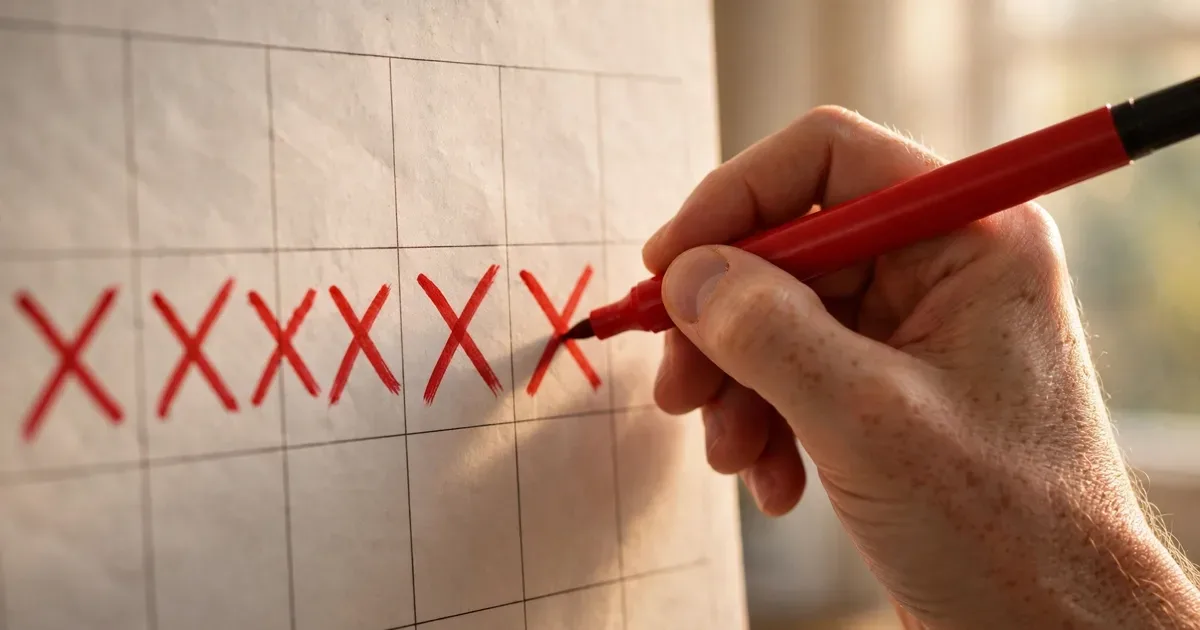
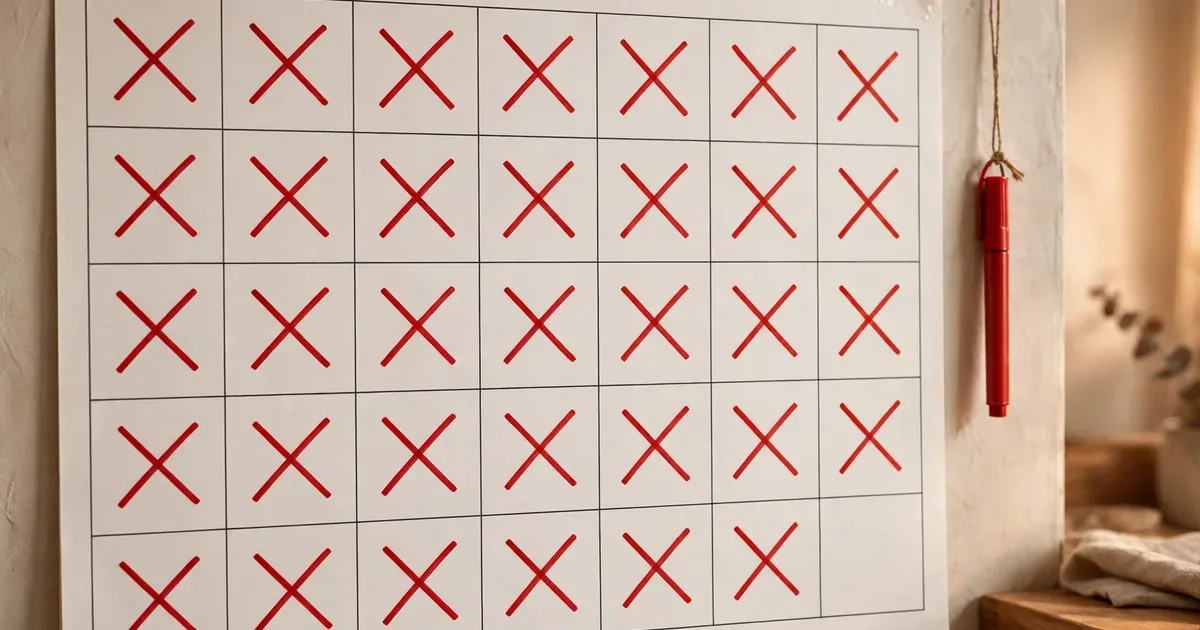
There is a story about this. A young comic asked Jerry Seinfeld how to get good. Seinfeld told him about a calendar. Get a big wall calendar. Every day you do the work, in his case writing jokes, you mark a red X. After a few days you have a chain of Xs. Your only job after that: don't break the chain.
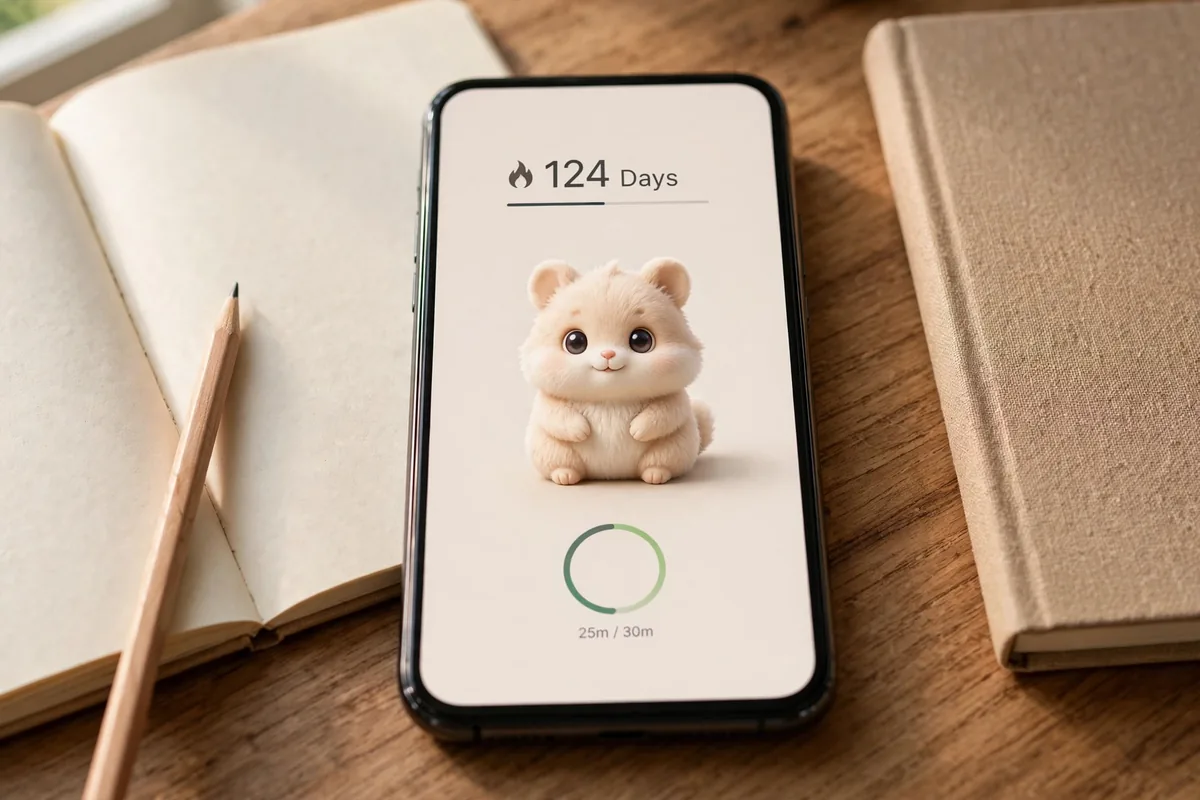
Whether or not the conversation happened exactly like that, the method spread because it works on the same two levers. The chain is visible, and a visible chain is a visible loss waiting to happen. Digital streaks are just that calendar chain with better lighting. Our app keeps a focus streak for the same reason, and the session history underneath it, so the chain shows real work and not just logins.
The honest part: how streaks backfire
Most articles about streak psychology stop at the praise. Here is the rest of it.
A habit streak can eat the habit it was meant to protect. People start doing the smallest, emptiest version of the behavior just to keep the number alive. Two token minutes. A session they got nothing from. The counter is happy and the actual skill quietly stalls. If the number becomes the goal, you have built a very reliable machine for fooling yourself.
Worse is what happens after a break. Consumer researchers Silverman and Barasch found that when a streak breaks, people rate their own commitment lower afterwards. Not just sad about a number. They judge themselves as less dedicated, which is a horrible conclusion to draw from a sick day or a dead phone. Dieting researchers named a cousin of this years ago: the what-the-hell effect. One slip, and the brain decides the whole thing is ruined, so it might as well be ruined properly. That is how one missed Tuesday becomes a missed month.
Streak freeze, emergency reserves, and never missing twice
Now the good news, because the fix is also research backed. Sharif and Shu studied what they call emergency reserves. That is a small amount of slack you are allowed in advance. One skip a week that does not count as a failure, decided before you need it. Across their studies, people given an emergency reserve persisted more, not less. Knowing the reserve existed made them protect the goal harder, because using the reserve itself felt like something to avoid.
That is the logic inside a streak freeze, the feature language apps made famous. One free miss, banked. It is not cheating and it is not softness. It is the difference between a streak that survives real life and one that dies on the first bad week. Same family as the plainest rule in habit building: never miss twice. One miss is an accident. Two is the start of a new pattern, and patterns are the whole game. Lally's habit research gets quoted in our guide to building a habit that sticks, and the forgiving math is the same. The habit does not need perfection. It needs a fast return.

How to keep a habit streak going without letting it run you
Our working rules, after watching a lot of streaks live and die.
Set the bar for the daily habit embarrassingly low. Count the smallest honest version. One focus session counts. It does not have to be your best day ever. Bad days can still clear a low bar. Most days, anyway. And clearing it is the whole thing, that is what keeps the chain going. Stick the session onto something fixed. Morning coffee. Sitting down at the desk. If it floats around loose in the day, it drifts off and dies. Decide the emergency reserve early. One skip a week is fine. Decide it while you are calm and thinking straight, not at midnight when you are tired and bargaining with yourself. That is the difference between a streak that lasts months and one of those heroic two week efforts that ends in a heap. Consistency is the actual product here. The streak number is just, like, the receipt for it. People ask, how long should a habit streak be? Long enough that losing it would sting a little. Week two, for most people, is when it starts to sting. It only gets worse from there. Pair it with a routine that starts the day right, like the 30 minute morning routine, and the first session of the day is done before the day can argue.
What to do when you break a streak
It will happen. Here is how to recover from a broken streak, step by step.
Restart within 24 hours, at a smaller size. Not Monday. Not next month. Tomorrow, with an easier session than usual, because the goal of day one after a break is not progress, it is proof. You are showing yourself the chain can start again. Then count honestly. Track your total days alongside the current streak. A person with 140 total days and a current streak of 2 is not a beginner, and the total proves it on the days the small number stings. Silverman and Barasch found the damage from a break shrinks when people can repair the streak somehow, and a repair, in real life, is just restarting fast with the record intact.
And look, if you broke it because life blew up, work, illness, family stuff, the streak still did its job. It kept you going through all the normal weeks, which is most weeks. So let it go without beating yourself up. The habit is the thing that matters. The chain was only ever a fence around it. This is also why beating the starting problem matters more than any counter: if starting is your real enemy, our first week guide on beating procrastination is the place to begin.
Questions people ask us about streaks
So do habit streaks work, really?
Yes. Well, yes with a catch. Loss aversion is real. The goal gradient is real. A habit streak tracker you can actually see puts both of them working for you instead of against you. They stop working when the number becomes the whole point and the actual habit goes hollow on you. Keep the session honest. Small is fine. Fake is not. Then the streak helps the habit instead of quietly replacing it.
Why does it feel so bad when a streak breaks?
Your brain files the streak under stuff you own. And losing owned stuff lands about twice as hard as gaining something feels good. Loss aversion again. It is not you being weak about a number. Longer streak, bigger thing to lose, harder it hits. Simple as that, sadly. Knowing why does not switch the feeling off. It does stop you treating the feeling like a verdict on you as a person, which helps some.
Okay, I broke my streak. Now what?
Start again the next day. Make it easier than usual. Keep your total days where you can see them. And drop the whole I will restart Monday thing, Monday is where restarts go to die. The emergency reserve studies say planned slack keeps people going longer. The repair studies say a quick restart makes the break hurt less. Both point the same way. Treat the break as information. It usually tells you exactly which kind of day needs a smaller bar, or an earlier session.
Is a streak freeze cheating?
No. It is the mechanic with the best evidence behind it. Sharif and Shu showed that a pre-allowed reserve makes people more persistent, partly because they work to avoid spending it. A freeze you decided on in advance is a rule. A freeze you beg for at midnight is a negotiation. Set the rule early, while it is still just a rule and not a rescue mission.
How long until a streak turns into an actual habit?
Longer than the posters claim. The UCL habit research put automaticity at about 66 days on average. Average, mind you. The range around it was wide, depends on the person and on what the habit even is. The streak's job is to carry you across those weeks. Somewhere in there the behavior starts feeling like yours, part of your identity rather than a task, and at that point the chain matters less because you do.
Start a chain worth protecting. Download Fluffy Friend free on Google Play, finish one focus session today, and let your pet celebrate day one. The streak counter and session history keep the record, and every in-app purchase supports real animal shelters. Day one is easy. Start there.