How to Build a Habit That Actually Sticks: 7 Steps
You know how this goes. New year, new month, new Monday. You decide this is finally the week you build the habit. Read every night. Exercise. Meditate. Write. Day one feels great. Day three is fine. Around day ten the book has slipped behind the couch and you are pretty sure you failed again.
You did not fail, or not the way you think. The whole design stank. Most of us try to build habits out of motivation and a loose plan, and by week two both have run dry. What works is a system. Seven pieces. Just the one. Just the one, seriously. One habit is all you get. More than that and you are kidding yourself, because two habits means no habit. Keep it tiny, tie it to something you already do every day without thinking, and leave it where your eyes hit it on their own. Never miss twice. Give it 66 days. And the habit should pay you back every single day. That last piece is the one everyone forgets, and honestly it may be the most important one.
Why most habits die by week two
Week one runs on excitement. That is the real trouble. Excitement is loud. Loud things fade fast. By week two the habit has to survive on structure, and most habits have none. Too big, too vague, or both. "Read more" is not a habit. It is a wish. "Read 20 pages every night" is closer. Still too big a bite for week one. So go for a habit that is almost silly small. Dumber than serious, even.
Then there is the second killer. A sneakier one. Motivation plays dress-up as a plan. "I really want this" sounds like a strategy in your head. It is just a mood, nothing more, and a habit that only shows up on days you feel like it is not a habit yet, not really. Not really. A hobby with guilt smeared on it.
Step one is dead simple. One habit. Only one. Not three. A single concrete daily thing. One sentence, with a when and a where. "Read one page after my morning coffee." That is a habit. "Get in shape" belongs on a gym poster taped to a wall. It is not a plan.
Start small: the 2 minute rule, so habits actually stick
Step two runs on the two minute rule. Scale your habit down to the two minute version. Read one page. Walk to the end of the street. Breathe for two minutes. That is the whole habit for now. Ridiculous, I know. That is the point.
A tiny habit is no big deal to start. At the start, all that matters is starting. Shoes are on, so the walk sort of happens. Book open, one page turns into three. On bad days, the two minute version keeps the chain alive. A five minute walk counts. Exercise day, done. One page still counts as reading day. The streak does not care how big the effort was, it really does not. It only cares that you showed up. Nothing else.

Habit stacking: attaching the new habit to an old one
Third step is the habit stacking bit. A new habit holds on better hitched to one you already do. Honestly the rule is dumb and it works anyway. You do the new habit right after something you already do. No wiggle room, no exceptions. Mug gets filled with coffee, I read one page before anything else. Teeth already brushed? Five pushups then. Nothing fancy. The old habit handles the reminding now. Willpower gets to sit this one out, it stays right on the shelf.
Find one thing you already do on autopilot and pin the habit to it. Coffee works. Brushing your teeth works. Lunch works. Mornings make the best anchor. The day has not had time to mess the plan up yet. Our simple 30 minute morning routine goes further, a whole first hour, if you want to go bigger. Just avoid flaky anchors. "After lunch" works. "After I feel like it" does not.
Track it: why a habit tracker keeps your streak going
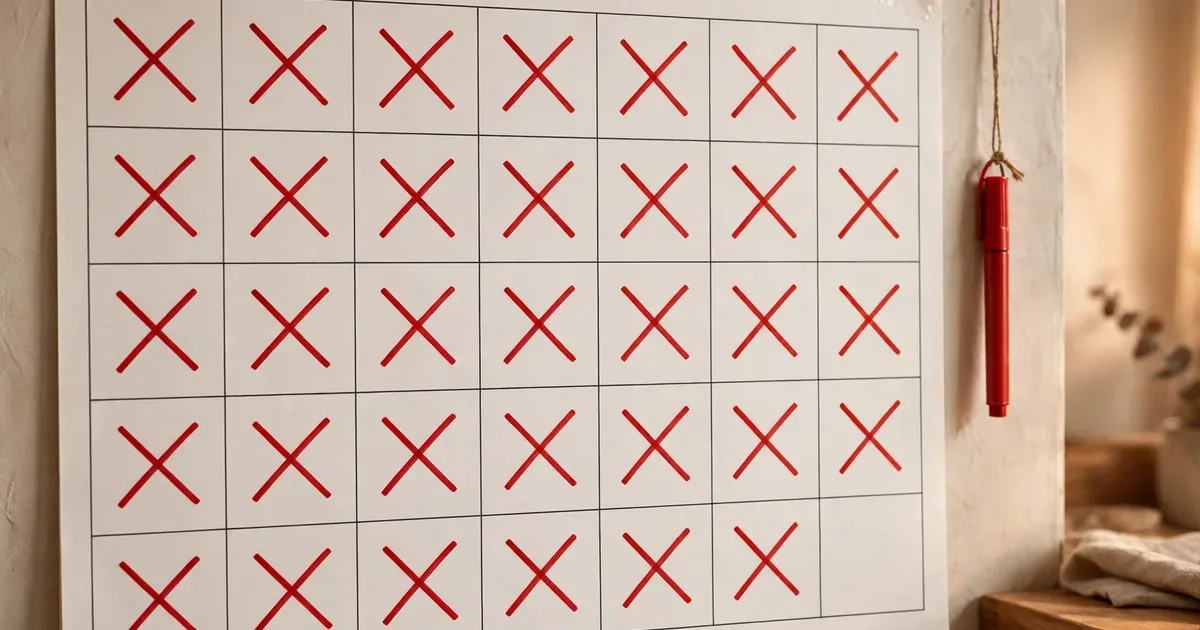
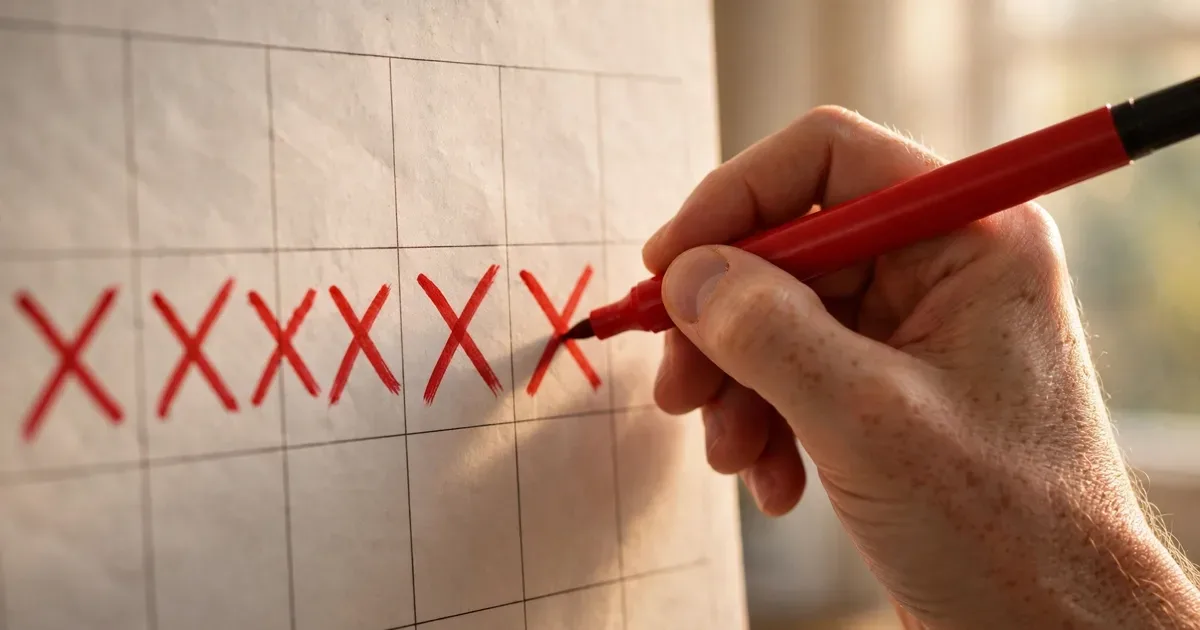
Step four. Track it every day where you will actually see it, because a habit you never track is one you quietly forget about. Put an X on a wall calendar. Old school gold star. Use a checklist app. Whatever. Whatever works. The point is the chain of X's staring at you every morning. After ten days straight, you do the habit just to keep the chain alive. Watching the chain get longer turns into the reward all by itself.
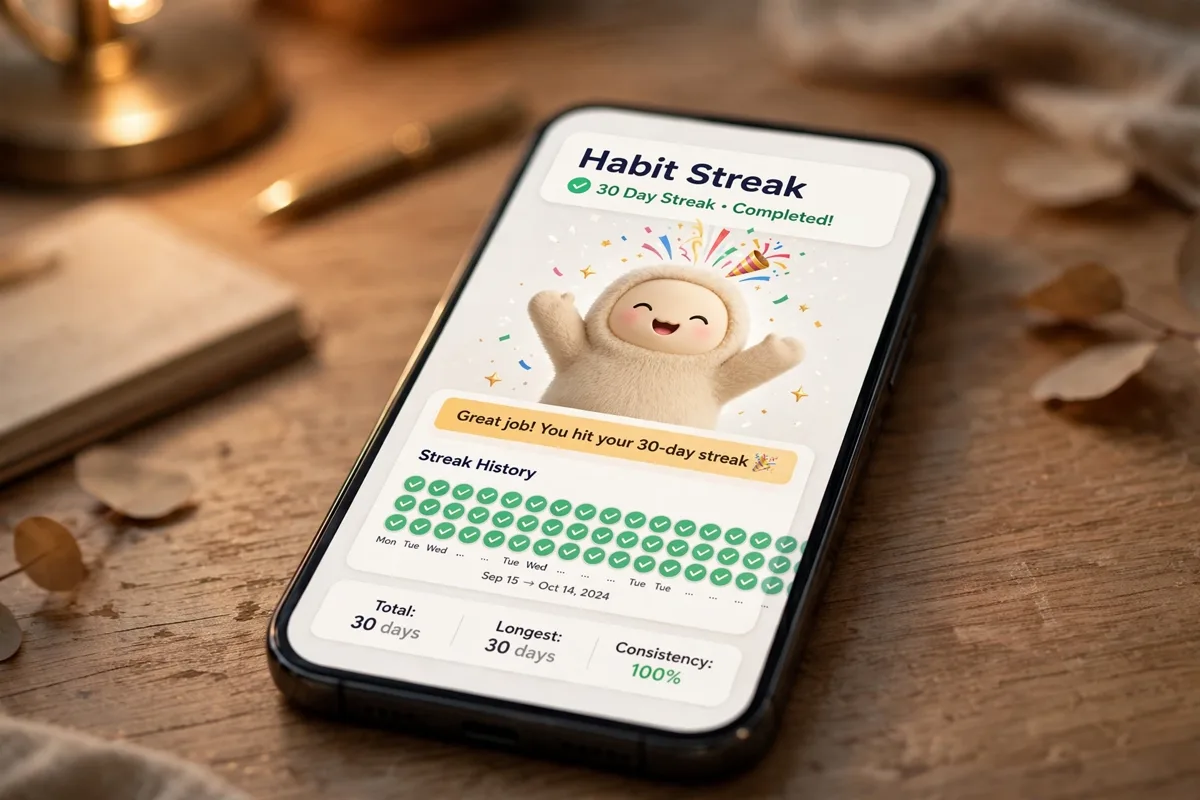
Pick one tracker, then actually stick with it for real. The best tracker is the one you will open, and for most of us that is the phone. Fluffy Friend is literally called "Fluffy Friend: Habit Tracker" on the Play Store. That says how central the streak is. Sessions build a visible chain. Coins and rewards land each finish. History shows the whole run. The pet celebrates every finished session. The immediate payoff, like the books say. Showing up feels good on day one. Not just day sixty six.
Our guide to streak and reward mechanics goes deeper on why immediate rewards beat guilt. And if starting is your weak spot, our first week of focus plan walks you through the first seven days of showing up.
Never miss twice: the rule that saves the habit
Step five is the rule that saves everything. You will miss a day. Fine. Miss once. Never miss twice in a row. One missed day is life happening. Two in a row is the start of quitting. The second day is when you come back, even if it is only the two minute version.
This rule works because it kills the all or nothing trap. Most habits do not die from one bad day. They die from the shame spiral after it. "I already ruined it, why bother." The never miss twice rule cuts that off at the knees. Missed yesterday? Tiny version today. On a rough day, shrink the session. Flowtime style: shorten the timer instead of quitting. Bending is what keeps it alive. A habit that bends does not snap.
66 days: the honest timeline for building a habit
Step six is about real time. Researchers at University College London found a new behavior takes 66 days on average to run on its own. Not 21. The 21 day thing is a myth and it refuses to die. Some people clicked at 18 days. Others needed way, way longer. Real talk though, how long does building a habit actually take? Longer than the internet promised. Fine.
That number is basically a permission slip, so day 30 still feeling like a slog is not a sign you are failing. You are not behind. You are normal. Most people quit around day 20. They figured it should feel automatic by now. It is not automatic. Not yet, anyway. Keep going. I mean it this time. Keep going, really.
Step seven is the one everybody skips. It is also the one where the habit starts paying you back daily. Habits run on getting something back. Discipline is not the engine. If the only payoff sits sixty days out, your brain is done by Friday. Hand it something now. A checkmark. A coin. A little creature that celebrates when you show up. That is the whole idea behind Fluffy Friend. You get the reward today. That is the part that drags you back tomorrow.
Once the habit is running, the counter takes over. Our post on habit streaks explains why streaks pull so hard, and how to survive your first broken one.
Common questions about building habits
How long does building a habit actually take?
Around 66 days. On average, anyway. That is from a University College London study on how behaviors go automatic. The range is big, though. Person to person. Habit to habit. That 21 day figure is a myth. It will not die. Just plan for two months. Stop measuring yourself against some internet meme.
What does habit stacking actually mean?
You glue a new habit onto one you already run on autopilot. The old one does the triggering. Coffee is poured, then one page, then the phone. The anchor remembers so you do not have to, and the new habit barely touches your willpower.
How do people really stick to a habit?
Trust the system, not the motivation. The fast version: begin ridiculously tiny, two-minute tiny, bolt it onto a habit you already have, and track it somewhere you will actually see it. Never miss twice. And give it the 66 days. Motivation gets you through week one. The system gets you through week ten.
Why do most new habits fail by week two?
Three reasons, usually together. Too big, too vague, or running on motivation. Motivation fades fast. "Read more" fails. "Read one page after my morning coffee" has a shot. A weak design kills off more habits than weak willpower ever manages to.
Is 21 days honestly enough to build a habit?
Nope. There is no real research behind the 21 day number. University College London researchers measured 66 days on average, with a wide spread. Two months is the safer bet. Anyone promising a new habit in three weeks is selling something.
Ready to finally build a habit that sticks? Download Fluffy Friend free on Google Play and start your first streak today. One small session. One happy pet. One X on the calendar. Again tomorrow.