Time Management for Students: 7 Systems That Actually Work
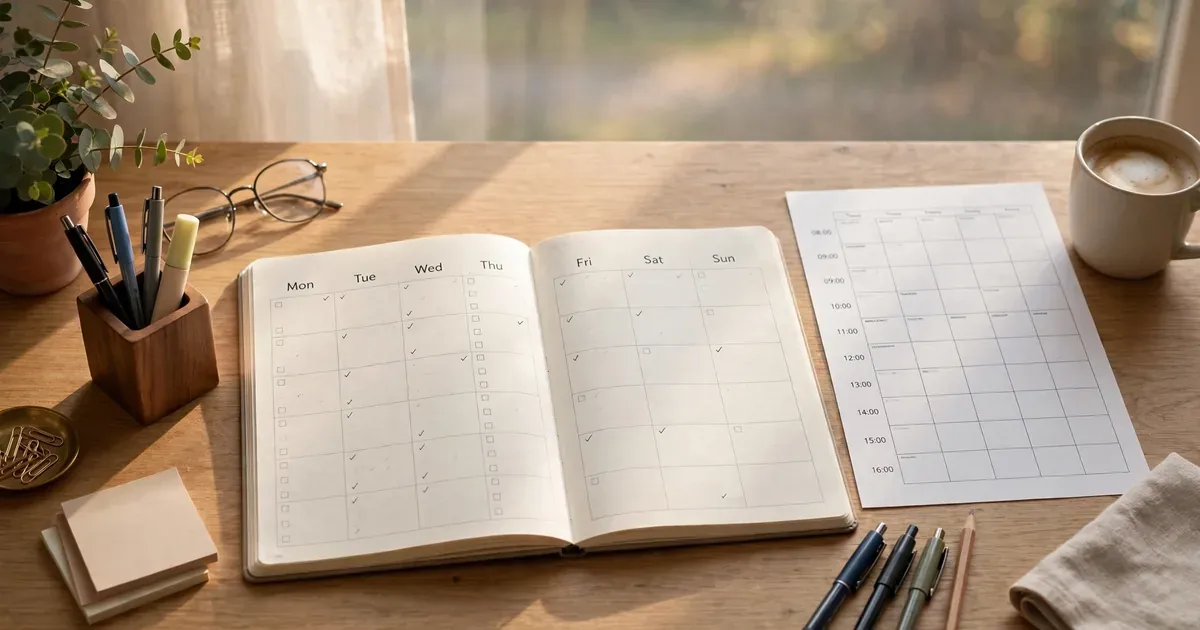
Time management for students usually gets taught as a personality trait. Some people are organized, the rest of us are just like this. That is not what the research says, and it is not what we see either. Time management is a set of small systems. Systems can be copied, which is lucky, because time management for students is a setup job, not a talent. Here are the seven that actually hold up in a real semester.
Honesty break first. It changes how the rest of this reads, kind of. Aeon, Faber and Panaccio did a big meta-analysis in 2021, PLOS ONE. They pooled 158 studies. Over 53,000 people in total. Time management was moderately linked to better academic performance, academic achievement and wellbeing, sure. But the strongest link was not grades at all. It was wellbeing. People who managed time well reported more life satisfaction and less distress, and that effect beat the performance one. Read the study yourself here: the PLOS ONE meta-analysis on time management. So no, the point of time management for students is not two extra hours of misery squeezed in somewhere. It is feeling less chased by your own week.
1. One weekly planning session does most of the work
Once a week you sit down, twenty minutes, and look at the whole week in one go. Classes. Deadlines. Work shifts. All of it. Fixed things go in first. Then study blocks get stuffed into whatever gaps are actually there. Student time management falls apart when every morning starts with fresh negotiations. A weekly schedule for students means Monday does not get a vote on what Monday contains. You decided on Sunday, when you were calm.
Britton and Tesser found back in 1991 that time management practices predicted college grades, in some analyses as strongly as the usual aptitude measures. And across the student studies, long term planning keeps showing up as the heaviest lever, heavier than day to day scheduling tricks. Plan the week. The days mostly follow.
2. Prioritization: the Eisenhower matrix, student edition
Every task you have fits in one of four boxes. Roughly. Urgent plus important. The assignment that is due tomorrow, that one. Important but not urgent. Revision. Applications. That project due in three weeks that will absolutely eat you alive if you let it. Urgent, not important: most of the group chat drama, honestly. Neither: the third hour of videos about productivity.
The Eisenhower matrix is old and slightly battered from overuse, but the core of it is the whole game of prioritization. Students live in box one and visit box four. The grades and the calm both live in box two. So box two gets scheduled first, before the week fills with noise. Urgent things will always find you. Important things only happen if you book them. That is half of time management for students, if we are honest.
3. Time blocking, with buffer time left in on purpose
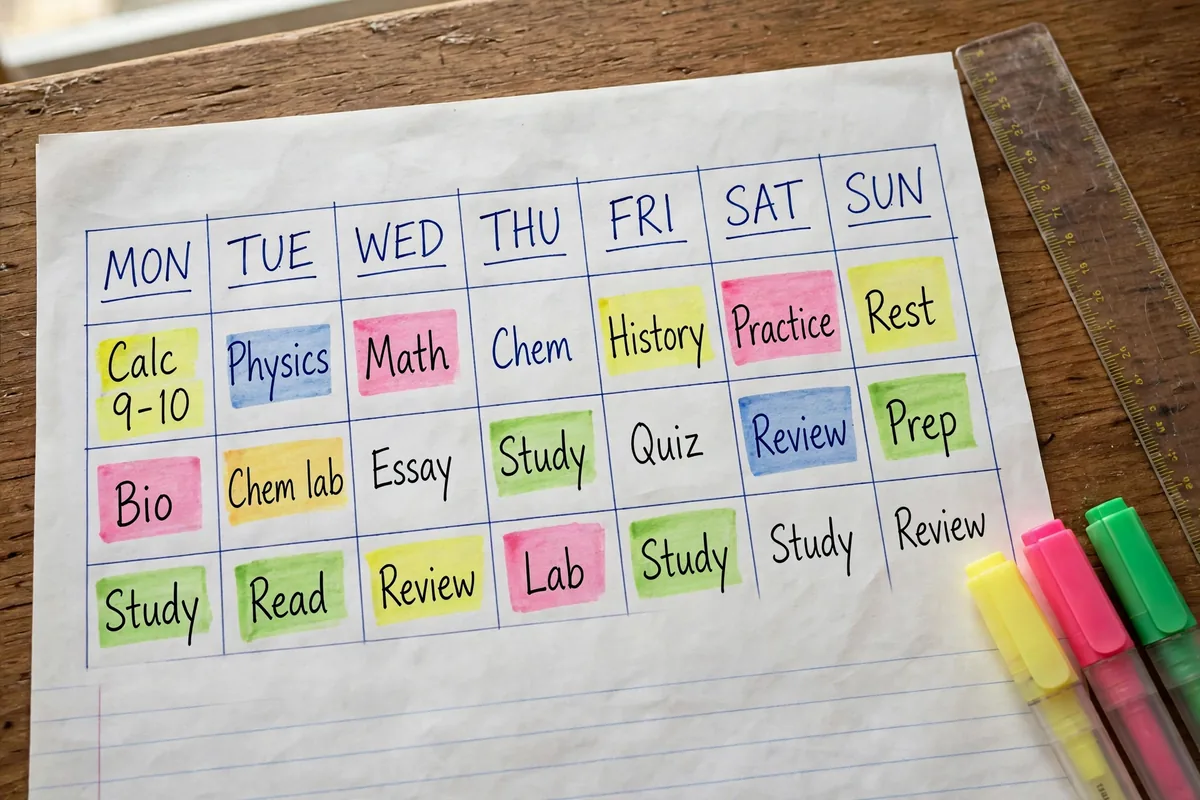
Time blocking means a block on the calendar belongs to one named thing. Not study. Biology. Chapter seven. The questions at the end. Vague blocks get skipped. Starting one still needs a decision first, and decisions are where days leak away.
Then leave gaps. Buffer time between blocks is not laziness, it is the difference between a plan and a fantasy. Classes run over. Buses do whatever buses do. A block ending at two, then a class at two, in a building ten minutes away. That plan fails every single day. And failing daily is exactly why people bin the whole system by week three.
4. Focus blocks are where the work actually happens
A calendar full of blocks means nothing if the blocks are mush inside. When a study block starts, one topic, phone somewhere else, timer on. We are biased, obviously, but a 25 minute focus block with a real break is the unit that makes time blocking honest. One block, one job, done. Single tasking is the rule inside the block.
This is the piece we built into our app. Sessions run in blocks in the app. The history then shows you, plain as anything, which subjects got their time this week and which got skipped. Once you can see it written down, how to manage study time stops being guesswork. The subjects you keep avoiding just sit there glowing in the data. Like a warning light on a dashboard.
5. Break big tasks down into next actions
Write essay. That is not a task. It is a weather system. You cannot start a weather system. So it just sits on the list making you feel guilty for a week. Break it down. Keep breaking until the first step is so small it is almost embarrassing. Find two sources. Draft the opening paragraph. Fix the references. Each piece fits inside one block, and finishing pieces is what momentum actually is.
Of all the time management techniques for students, this one rescues the most deadlines. The same trick rescues exam season. Our full breakdown of building an exam study plan week by week works exactly like this. Topics get mapped first. Then the days get filled with little blocks.
6. Protect sleep and downtime like they are deadlines
Remember the meta-analysis from the top. Wellbeing was the strongest link in it. Stronger than grades. So rest goes in the system. It is not a prize you get for surviving the system. A student who actually sleeps learns faster per hour than a wrecked one does. Cutting sleep to buy study time is a bad trade. Even just on grade maths, it is a bad trade.
Downtime goes on the calendar too. Not as a leftover. As a block, with a name, that other things cannot eat. Time management tips for students love to skip this part because it sounds soft. It is the load bearing part.

7. A ten minute weekly review keeps the system alive
Sunday, same time as the planning session. Ten minutes. This tiny review is the most underrated piece of time management for students. What got done, what slipped, what did the slipping have in common. Most plans do not die from one bad week. They die because a bad week quietly becomes the story and nobody reopens the plan. The review is where the plan gets forgiven and rebuilt, slightly smarter.
Pair it with the habit side of things. Systems survive because they are attached to routines you already have, which is the whole argument in our guide on building a habit that actually sticks. And if mornings are where your days fall apart, the 30 minute morning routine plugs straight into the front of this system.
None of this needs a new personality. Time management for students that actually works needs one planning session, box two before box one, named blocks with breathing room, and a review that forgives you weekly. That is how to manage time as a student without living like a project manager. Time management skills are boring in the best way. Boring compounds.
Time management for students: questions we hear most
What is the best time management technique for students?
If we had to pick one, weekly planning. The best way to manage study time is boring, sorry. You decide it weekly. In advance. The research keeps pointing at this one habit. And it makes the other techniques easier too, because the week already has a shape before the week starts. After that, time blocking for the work itself, and focus blocks inside the blocks. Techniques stack. Planning is at the bottom. Everything else sits on it.
How many hours a day should a student study?
Fewer than the internet wants you to believe. Two to four real focus hours. In blocks, with breaks. That beats eight fuzzy hours, most days it does. The honest answer depends on your course load. Count finished blocks, not hours. Watch how the count moves across a couple of weeks. Time management for college students usually breaks right here, on hours that were never really study hours. If the blocks are real, the hours take care of themselves.
Does time management really improve grades?
Yes, moderately, and that word matters. The 2021 meta-analysis on time management for students and workers found a real link with academic achievement, and Britton and Tesser found time management practices predicted grades decades ago. The bigger win, the more reliable one, was wellbeing though. Expect steadier grades. A calmer semester. Not some magic transformation by Friday, that is not on offer.
How do I actually make a weekly schedule as a student?
Fixed stuff first. Classes, work, sleep. Then two or three study blocks a day into real gaps, each named by subject and topic. Leave buffer time between blocks. And put one thing you enjoy in there, in writing, every day. Review it once a week. Adjust it. Do not just abandon the whole thing because Tuesday went wrong. A messy schedule you keep adjusting beats the perfect one you quit in week two. That is a time management plan for students that survives contact with a real week. Simple, too, and most time management strategies for students are simple. The ones that fail are just the ones nobody can keep repeating, week after week.
What even is the Eisenhower matrix, in plain words?
Four boxes made from two questions. Is it urgent, and is it important. Do the urgent and important now. Schedule the important but not urgent stuff. That box is where the grades live. And the calm, weirdly. Shrink the urgent but unimportant stuff down to almost nothing. Delete the rest without a ceremony. That is the entire tool, and it takes about ninety seconds a day.
Ready to run your week on systems instead of panic? Download Fluffy Friend free on Google Play, set up your first focus block, and let your pet keep the schedule company. Every in-app purchase supports real animal shelters. Plan the week once. Then just follow it.