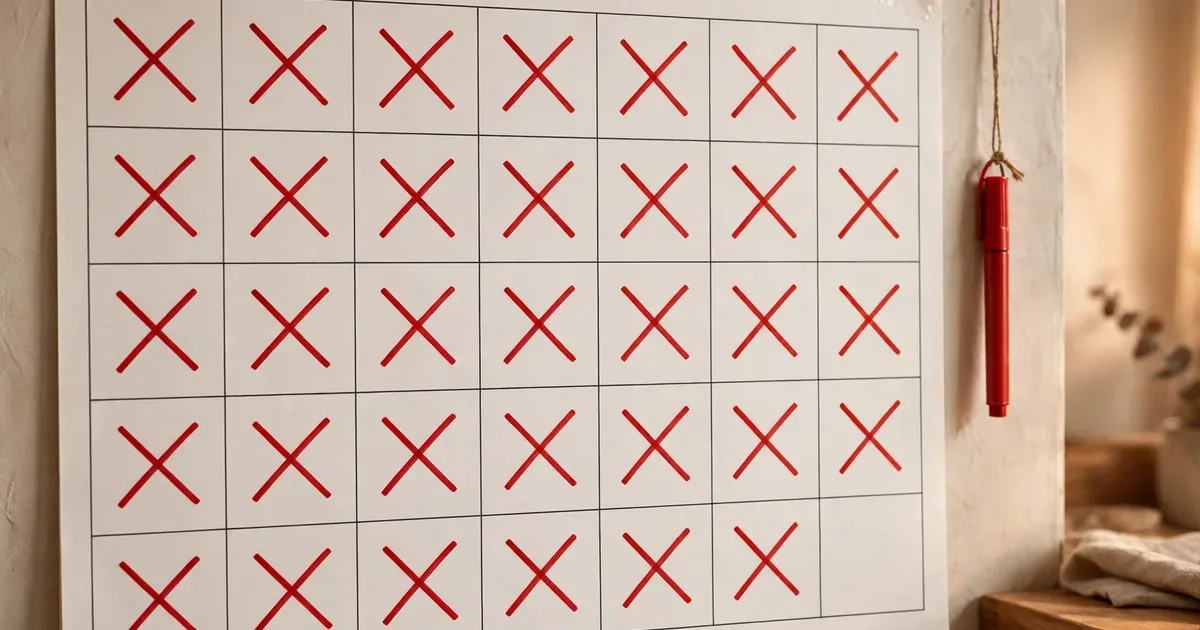
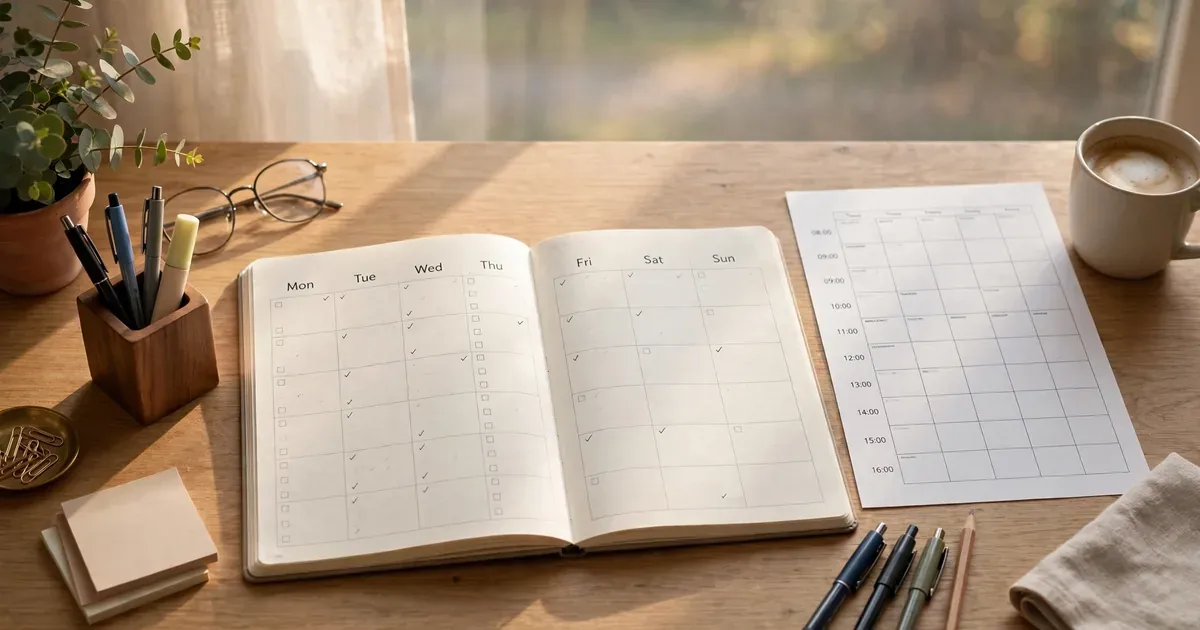
How to Study for Exams: Build a Plan That Holds Up
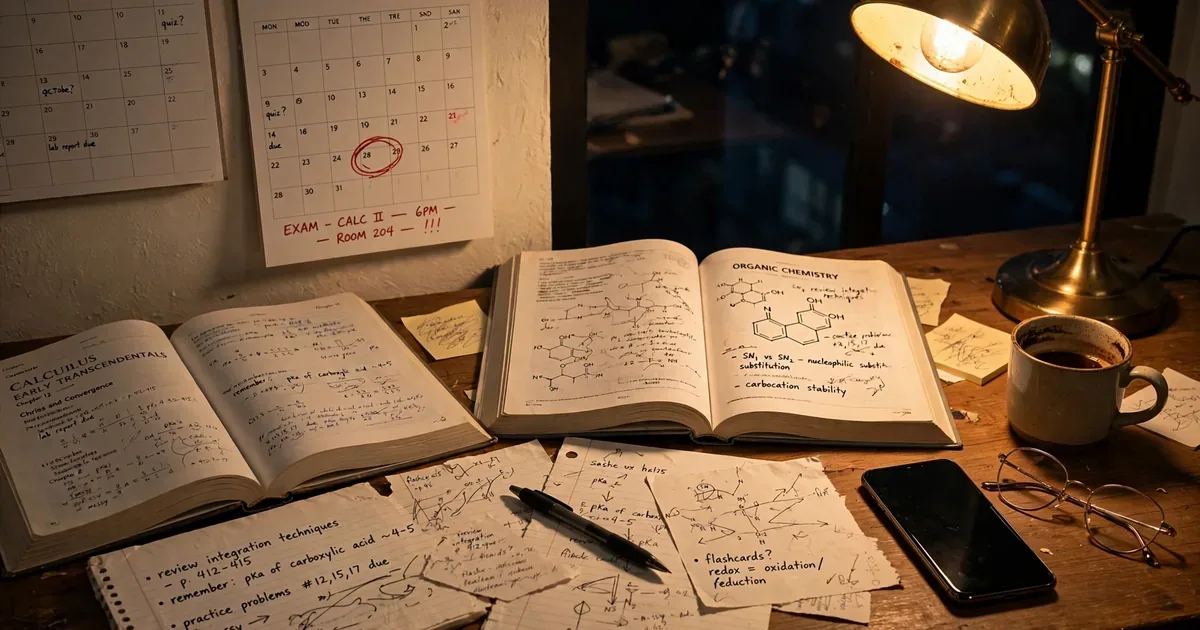
Smart is not the issue. Most students mess up because they study like the exam date is some big surprise. It never is. You know the date and roughly what is on it. And still, here is what most of us do. Three days before, you finally open the book, read until the words blur, panic a bit, get terrible sleep, and walk in just hoping for the best.
There is a better way and it is boring in the best sense. A plan. Not some color coded thing. Just a simple exam study plan that says what you study and when you study it. That is the whole trick to getting through exams without the meltdown at the end.
Start with a map of everything the exam covers
Before any study session, just list everything that could be on it. Syllabus. Slides. Textbook chapters. All of it. Write each topic down, one by one. Takes an hour. Maybe two. Feels like doing nothing useful. It is actually the opposite.
You cannot plan around stuff you have not even looked at. Most people skip this and just dive into chapter four, with no idea how many chapters there even are. Then the night before the exam they discover a whole unit they forgot existed. I did that in second year with organic chemistry. Do not be me.
Once the list exists, mark each topic. The ones you know cold. The ones you sort of know. The ones that might as well be in another language. The scary ones get the most sessions. The easy ones get one quick review near the end. That is the whole secret of a real exam study plan. You do not split time evenly. You split it by fear.
Build your exam study plan week by week
Now count your weeks and work backwards. Four weeks to the exam? Weeks one and two are for learning new material. Week three is for revising. Week four is for practice questions and calming down. Only two weeks? So week one is for learning and week two is for revising. Got one week? Fine. Every day just gets a job, that is all.
Put topics into weeks before you touch the days. Days come later. This is the spot where most exam schedules fall apart, by the way. People plan days. Monday: chapter three. Tuesday: chapter four. By Thursday the plan is dead because chapter three took three days. Weeks have slack built in. Miss Tuesday and the week still works.
Put the scary topics in the early weeks. Your brain needs time to sit with hard material. Cramming it last never quite sticks. Easy topics go late. They need one review. And here is the part nobody wants to hear. The hardest part of any exam study plan is day one. Not week three. Day one. The exam feels far away and the couch feels very close. If you cannot get started, our guide on beating procrastination in your first week is basically written for this exact situation.
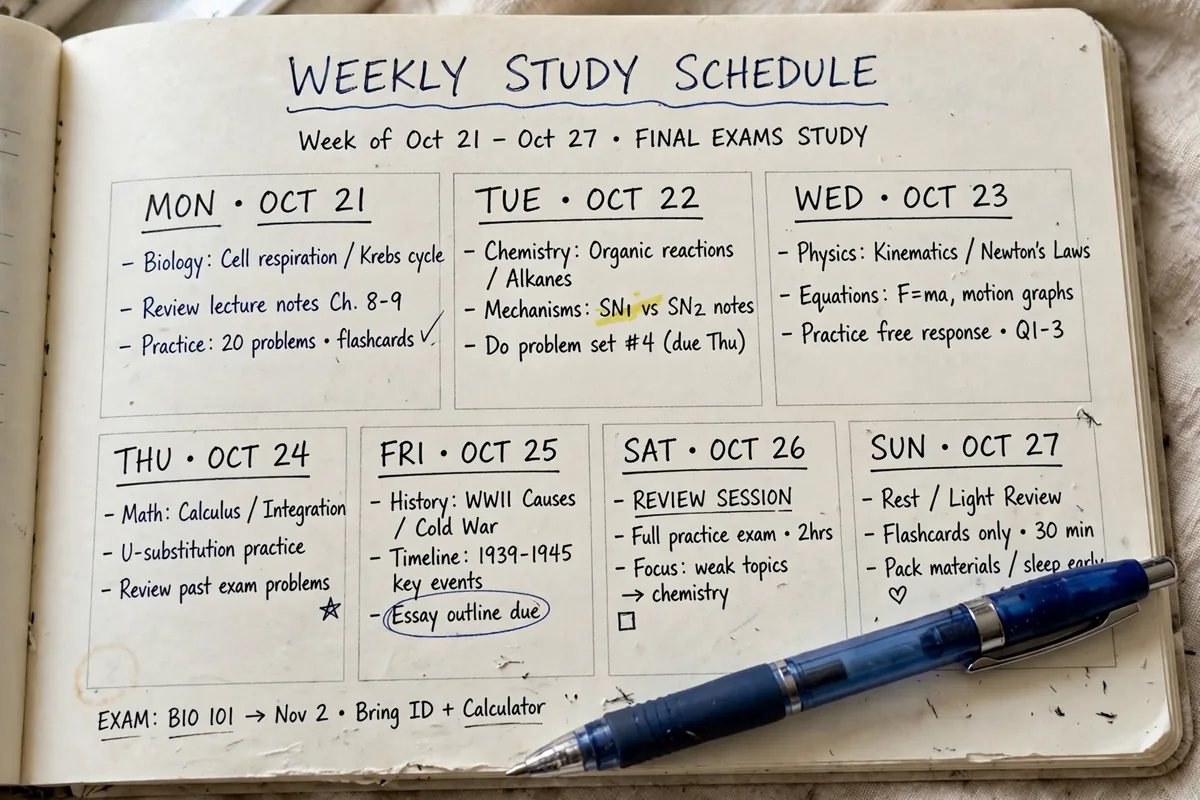
Daily schedule: study blocks, not marathons
Here is the classic mistake. Blocking out study nine to five like the exam is a full time job. Then the whole day goes, five of the eight hours lost to the phone, and the rest of it lost to feeling bad about it. A schedule that actually survives is built out of blocks, nothing fancier than that. Twenty five on, five off, the old rhythm everyone keeps coming back to.
Three to five blocks a day is the plan, not eight hours of fuzzy studying. Before each block, write down what it covers. Something like block one: flashcards for cell division. Keep it concrete like that. Block ends, you stand up, get water, move to the next one.
This is also where a timer stops being optional. We built Fluffy Friend around exactly this: a study timer mode for revision blocks, and a session history that shows which topics got their sessions and which ones you have been quietly avoiding. Very sneaky. Very useful. The streak keeps the daily revision alive across the weeks, because honestly, showing up every day is the whole battle in exam season. The full guide on running study sessions with a timer has the rest of it, the small things that make each block count.
Revision that sticks: active techniques inside the plan
Reading the chapter over again is not revising. It has the smell of it, but that is all. Eyes going, pages turning, brain switched to standby. The ones that stick are always the annoying ones. Shut the book and dump whatever you remember onto the page, no order to it. Flashcards. Old exam questions. A blank page and recall, the whole awkward kit. Slow going, and it stings a little, which is how you know it is actually doing something. If the whole session feels smooth, you were probably only reading.
Dunlosky and colleagues, in a review from 2013, put practice testing and spaced practice above everything else they rated, including rereading and highlighting. So those annoying methods belong in the middle of the plan, not bolted on around it. Revision week is mostly recall. Old topics get their recall rounds. New topics get one pass, then a recall round the following day.
Space it out. One go today. One in three days. One next week. Pick it up, set it down, come back when it has gone hazy again. The gap does the real learning. There is a whole separate post digging into five study techniques backed by science, drop those into each week. And take real breaks between the rounds. Your brain files things in the quiet moments. The phone does not count as quiet time, and I only know because I tried that too.

The last day: wind down, sleep, then walk in calm
The day before an exam is for holding, not learning. If it is not in there by now, one panicked night will not force it in. The final day has one job. Just protect what you have already built.
Light review, that is all. Your summaries. The formulas. Stuff you mostly know already. Then stop. Dinner time, stop, seriously. Take a walk. Watch something dumb. Let your brain settle.
Sleep is the most underrated exam technique in existence. An all nighter trades one evening of review for a brain that cannot think straight the next morning. Terrible trade. Eight hours of sleep, not optional. Pack the bag while it is still evening and your head is clear. Look up the exam room before the day itself. Eat a proper breakfast in the morning, a real one. Then walk in as calm as you can get. Not feeling calm? Pretend calm if you have to, until the paper lands on your desk. Open with the one question you know cold. Once you are moving, the nerves usually quiet down by themselves. They really do.
Zoom out one level and our guide to time management for students lays out the seven systems this exam plan sits inside, weekly planning first.
Questions students actually ask
How many hours a day should I study, really?
Fewer than you would guess. Three to five solid blocks beat eight distracted hours, every time. Four proper 25 minute blocks with real breaks make a good day. The hours the phone was in your hand do not count, though. We both know which hours those are.
When should you actually start studying?
Earlier than feels necessary. A big final wants three or four weeks of prep. That gives you learning weeks, a revision week, and a taper. Two weeks covers a smaller exam. One week is pure survival mode, and it barely works. Truth is, starting early beats every technique out there. Three weeks of messy prep still wins over a beautiful plan started three days before the exam.
Does cramming the night before actually work?
For shoving a few facts in overnight, sort of. For real understanding? No. Cramming skips the gaps that build memory, and it eats your sleep, which makes your thinking sluggish the next day. If the night before is genuinely all you have got, go for the highest value material and stop in time to actually sleep. If a plan was on the table though, cramming was never the pick.
How do I actually make a study plan?
The whole thing is five steps. Write down every exam topic. Scary ones go first. Count backwards from the exam date, drop topics into weeks, hardest first. Then fill the days with short blocks. No marathon days. Marathon days fall apart the second a real week gets hold of them. Study by pulling things out of your head with gaps between reviews, never by rereading. That is the whole thing, really. Then pin the plan on your wall where you keep seeing it.
What do I actually do the day before an exam?
Light review in the morning, then that is it, you stop. Summaries only, no new chapters. Have the bag packed the night before. Double check the time and the room, so nothing surprises you. Eat a real dinner. Sit down for it properly. Then sleep. A full eight hours. The day before is about walking in calm and rested. That is worth more than one more topic. The work is finished by now. Trust the weeks you already put in.
Want something that keeps this plan alive, one day to the next? Get Fluffy Friend free on Google Play, choose your pet, and do your first revision block tonight. Every in app purchase supports real animal shelters, so your focus time does real pets some good too. The exam is coming no matter what. Walk in ready.