Flowtime Technique: Focus Without the Fixed Timer
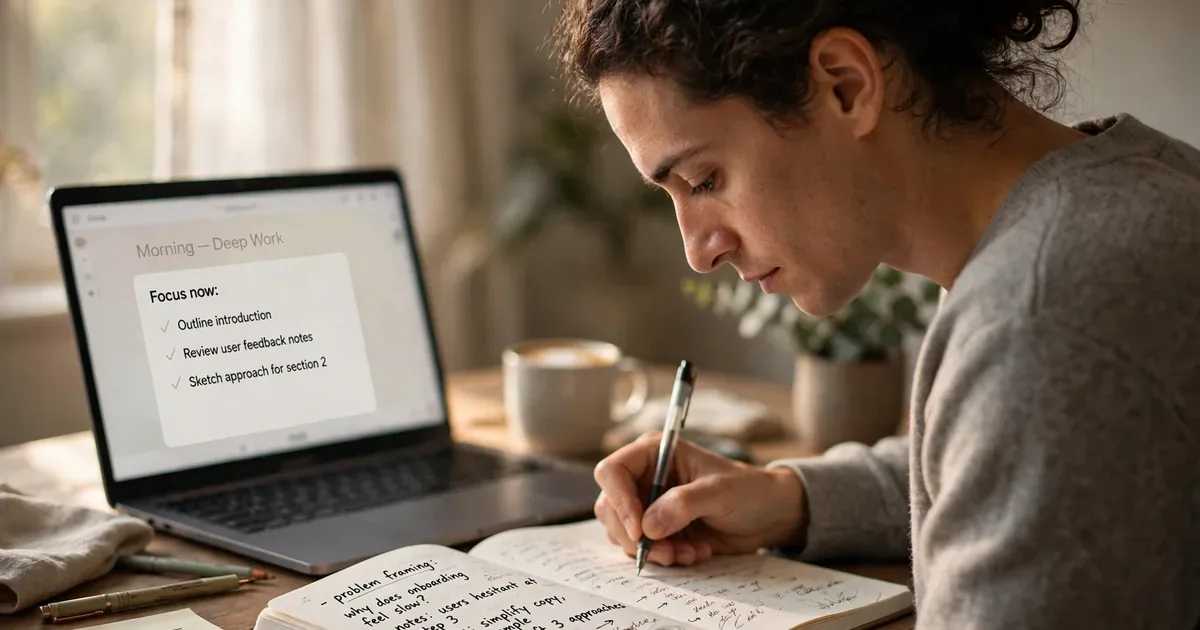
You have felt this before. The work is finally rolling, and you are deep in it. Code is finally clicking, or the essay is half writing itself, and then boom, the timer goes off. Twenty five minutes, time for a break. Except you were not tired at all. You were on a roll, and now you have to stop while the thought drains out of your head.
That is the one real flaw in Pomodoro. It decides for you when you stop. Great on a Monday when starting is the problem. Terrible when the work is pouring out of you and a little bell orders you to get up and take a walk. Flowtime does it the opposite way. No preset length at all. You keep going until your focus runs out, then you stop. That is the whole idea, and honestly it is simpler than it sounds.
What the flowtime technique actually is
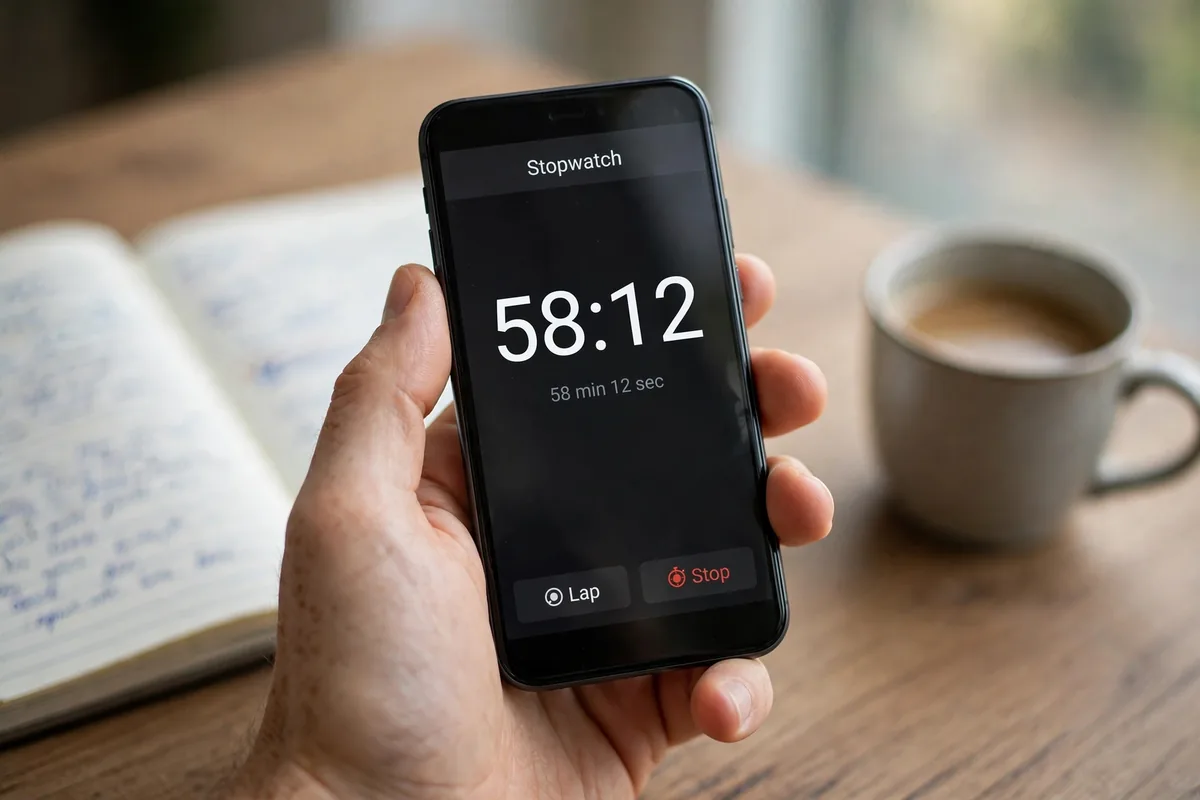
With flowtime, nothing about the timer is fixed in advance. Nothing counts down. No bell waiting at the end. You start a bare stopwatch, the kind that just counts up, and keep at it until your attention starts sliding sideways. Then you stop it, and jot down how long you really kept going. Just one true number. 58 minutes, 23 minutes, whatever it says.
The name tells you most of it, honestly. It banks on flow, that strange pocket where the work feels effortless and time goes missing on you. Pomodoro assumes every session is going to behave the same, which, come on. Flowtime does not pretend that. Some days that number is 80 minutes, some days it is 12, and you log both the same way. Both count.
So what makes anyone pick this instead? Getting into flow is slow. The warm up is slow, 15 or 20 minutes without even trying. If a stiff timer cuts you off at 25, you end up with maybe 10 minutes of genuine flow, if that. That is the point. Counting up leaves that door standing open. The flow drying up is what decides it, not some number.
Flowtime versus Pomodoro: the real difference
Let us be fair to Pomodoro first. It is the best method we know for starting. If your problem is opening the laptop, a fixed 25 minute block is magic. Our Pomodoro for ADHD guide is built on exactly this logic: fixed lengths remove decisions.
Flowtime solves the opposite problem. The session is already going. You are warm. The work has momentum. Pomodoro would interrupt you. Flowtime lets you keep going. So the real difference is not which is better, it is which problem you have today. Starting problem? Pomodoro. Interrupting problem? Flowtime.
There are versions of both everywhere. DeskTime's 52 and 17 pattern is one named version of the same instinct, longer work with longer rest. And a 2025 comparative study by Renacido and colleagues, seen on ResearchGate, put Pomodoro and Flowtime head to head among college students. We are not going to crown a winner from one study. But the fact that researchers are testing both seriously tells you flowtime is not just a blog trend.
How to run a flowtime session, step by step
Here is how a flowtime session actually works. Pick one task. Then start a count up timer, not a countdown. A stopwatch. A countdown is a threat and a stopwatch is just a record. You are not racing anything.
Work on the one task. When you catch yourself drifting, rereading the same paragraph for the third time, hand going toward the phone, that is the signal, so you stop the timer and get the number written down. 47 minutes, 19 minutes, whatever it shows.
Two mistakes people keep making here. First, they do not stop. They push through the fade because a long number feels like an achievement. It is not. Flowtime is not about long sessions. It is about honest ones. Second, they never write the number down. Write it down. The log is the method. Without it you are just working without a timer and calling it flowtime.
In our app you can do this with flexible session lengths. Set the timer longer than you expect to need, or just run the count up style, and the session history keeps your actual times. Over a week you start to see your own rhythm. Tuesday afternoons run long. Friday mornings do not. That tells you when to schedule the hard stuff.
Breaks in flowtime: rest in proportion to the work
So how long do you rest? In proportion to what you just did. That is the flowtime break rule. Most guides skip right past this bit. Short work gets a short break. Long work earns a proper break. Simple idea, once you think about it. Rest should fit the work you did, not the clock.
Why? A ninety minute deep stretch wears you down in a way a twenty minute warm up just does not. Give both the same five minute break and you burn out by Wednesday. Or so it feels. Take the break that session earned. Walk around. Get coffee. Come back once your head feels clear.
One more thing about flowtime breaks. They are the soft spot of the whole method. Pomodoro stops you. No choice. Flowtime does not. So the break rule lives in your head. Session ends, you stand up. Every single time. Skip that and the sessions all blur into each other. And that is the 3 pm fog: tired, and no clue what you did.

This is also where flowtime plays nicely with deep work routines. If you are working from home and your days are mostly long stretches, proportional breaks just fit. Morning deep session earns a long lunch. Short afternoon session earns a quick stretch.
Who flowtime suits best, and who should skip it
Flowtime is made for people whose work needs a warm up. Writers. Coders. Researchers. Students grinding through a hard problem set. If your best work comes in long unbroken stretches, fixed timers are working against you.
It is also good for anyone who hates being interrupted by design. Some of us get genuinely annoyed by the Pomodoro bell. Not distracted annoyed. Angry annoyed. If Pomodoro has died on you three times already, give the flexible method a shot before you decide you are hopeless with focus systems. The system was the problem. Probably not you.
So who should skip it? Be honest here. If starting is your problem, skip flowtime for now. Count up timers give procrastinators nothing to grab onto. No edge. No "just 25 minutes" deal. Fixed Pomodoro wins for beginners. Every time. Or skip it if meetings chop your day up anyway. A calendar full of 30 minute meetings already decides how long your sessions are. No method on earth can fix that.
One more thing. If you are still working on the habit of showing up every day, our habit building guide is the place to start. Nail the daily habit with something simple first, then switch to flowtime for the sessions themselves.
New to the classic method itself? Start with our beginner guide to the pomodoro technique, official steps, rules and all, then come back here when the fixed timer starts fighting you.
Flowtime technique: questions people actually ask
What is the Flowtime Technique, exactly?
There is no fixed timer involved at all. Start a count up timer, work until your focus fades, stop, and write down how long you worked. Breaks fit the session length. That is all. No preset blocks anywhere. No alarm butts in to drag you out.
How does the Flowtime Technique differ from Pomodoro?
Pomodoro is all fixed blocks. Usually it is 25 minutes of work, 5 of rest, all decided up front. Flowtime lets the session length work itself out. You stop when focus fades and rest based on what you did. Pomodoro is better for starting. Flowtime is better for not being interrupted once you are going.
How long should flowtime breaks be?
In proportion to the session. A short session gets a short break. A long deep session earns a longer one. The exact numbers are not the point here. Fit the rest to the effort, not to the clock. Stand up the moment the session ends. Every time. Come back once your head feels clear again.
So is flowtime actually better than Pomodoro?
Depends what your actual problem is. If starting is the hard part, Pomodoro wins. And it is not even close. If being interrupted mid flow is your real enemy, flowtime wins. For most people, the honest answer is use both, on different days.
Who should use the flowtime technique?
Deep workers. Creatives. Students whose work needs a long warm up. Anyone whose best work comes in long unbroken runs, basically. But if getting started is what trips you up, skip it. Same if your calendar is jammed with short meetings. Flowtime needs long open stretches, plus a daily habit that is already running for it to sit inside.
Ready to try a session with no fixed timer? Download Fluffy Friend free on Google Play and run your first flowtime session with flexible session lengths. Your pet celebrates when you finish, however long it was, and session history logs your real rhythm. Every single in-app purchase supports real animal shelters. Start the timer tonight. See how long your focus holds.