Memory Palace: How to Build One and Remember Anything
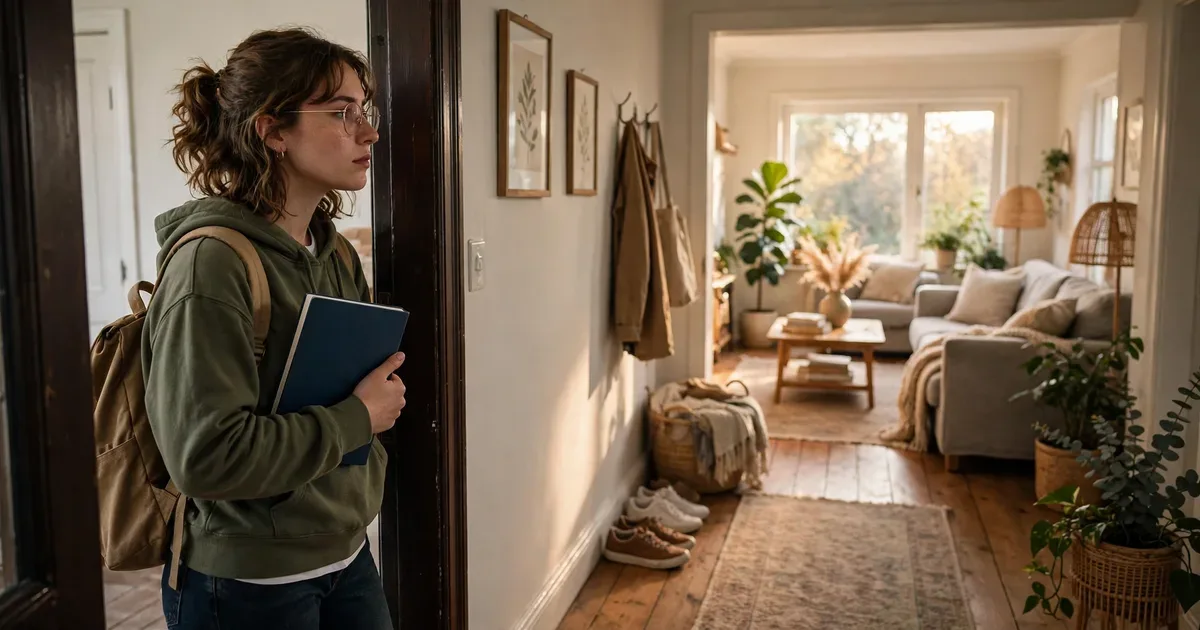
You can hold a list in your head for about an hour. You read it, you nod at it, you could swear you know it. Then somebody asks you for item seven and there is just fog. Meanwhile you can walk through the house you grew up in, eyes shut, twenty years later, and describe the wallpaper in the hallway. Nobody taught you that wallpaper. It just stayed.
So. Two kinds of memory there. One leaks. One does not. A memory palace is how you sneak the first kind inside the second. Lists, facts, the order things happened in, all the leaky stuff, gets hidden inside places, which do not leak at all. Each item becomes a picture. The picture sits somewhere along a route through a building you could draw in your sleep. Same route every time. Then remembering is just walking the route and looking at what you left there. This post covers what the research says, how to build your first palace step by step, and one full worked example, the first ten elements of the periodic table, placed through an ordinary house, stop by stop.
What a memory palace actually is
Method of loci, formally. Loci, Latin, places. Old technique. Very old. The story that comes with it: Simonides, Greek poet, at a banquet. He steps outside for a minute. The roof comes down on everyone still in there. Afterwards the bodies are in no state to be identified, and he names them anyway. From memory. Because he remembered who was sitting where. Frances Yates wrote the history of all this in The Art of Memory, 1966, and the method runs through about two thousand years of speakers holding entire speeches in their heads. Paper was scarce. Printing did not exist. Your head or nothing.
The mechanics fit in one breath. Place you know cold. Route through it, stops in a fixed order. Each item becomes a picture, and the picture gets set down at a stop, doing something to the stop. Recall is the walk. That is it. Order comes free, which is the bit a list never gives you. Routes have order built into them.
Why does it work. Best guess from the research: your brain runs a very old, very strong system for places. Finding food. Finding home. Not walking into the river. That system kept people alive, so it is built heavy. List memory got built light. A palace is the weak material riding on the strong system. Cheating, sort of. Effective cheating.
What the studies keep finding
The champions first. 2003, Eleanor Maguire, University College London. Her team scanned ten of the top memory performers in the world, championship people, and compared them against ordinary controls. Findings that surprised everyone: the champions' brains were not built differently. IQ, nothing special. What nine of the ten had was a technique. This one. While memorising, their scans lit up the navigation parts, hippocampus and neighbours. Not remembering harder. Remembering in places.
Fine, but can the rest of us learn it. 2017, Martin Dresler and colleagues, published in Neuron. Fifty one ordinary volunteers, no training, split into groups. One group got six weeks of method of loci training, half an hour a day, roughly. Before: about 26 words recalled from a list of 72. After: about 62. The actual memory athletes in the same study got 71. So six weeks of half hours took ordinary people most of the way to champion level. And four months later, no practice in between, most of the gain was still sitting there. Their brain connectivity had shifted too, toward the athlete patterns. Measurably.
One more. Wagner and colleagues, Science Advances, 2021: the training built specifically the durable kind of memory. The still-there-tomorrow kind. Not a sharper ten minute grab. So this is not some ten minute party trick for shopping lists. It holds.
How to build your first palace, step by step
Step one, the building. It must be a place you can picture without effort. The home you grew up in. Your current flat. A school you spent years in. The walk to a shop you visit every week. Detail is the whole game here. Kitchen counter test: if you cannot tell me what is on yours without thinking, the place is too new. Pick another one. Start small, too. One route. Ten, fifteen stops. Plenty for a first palace.
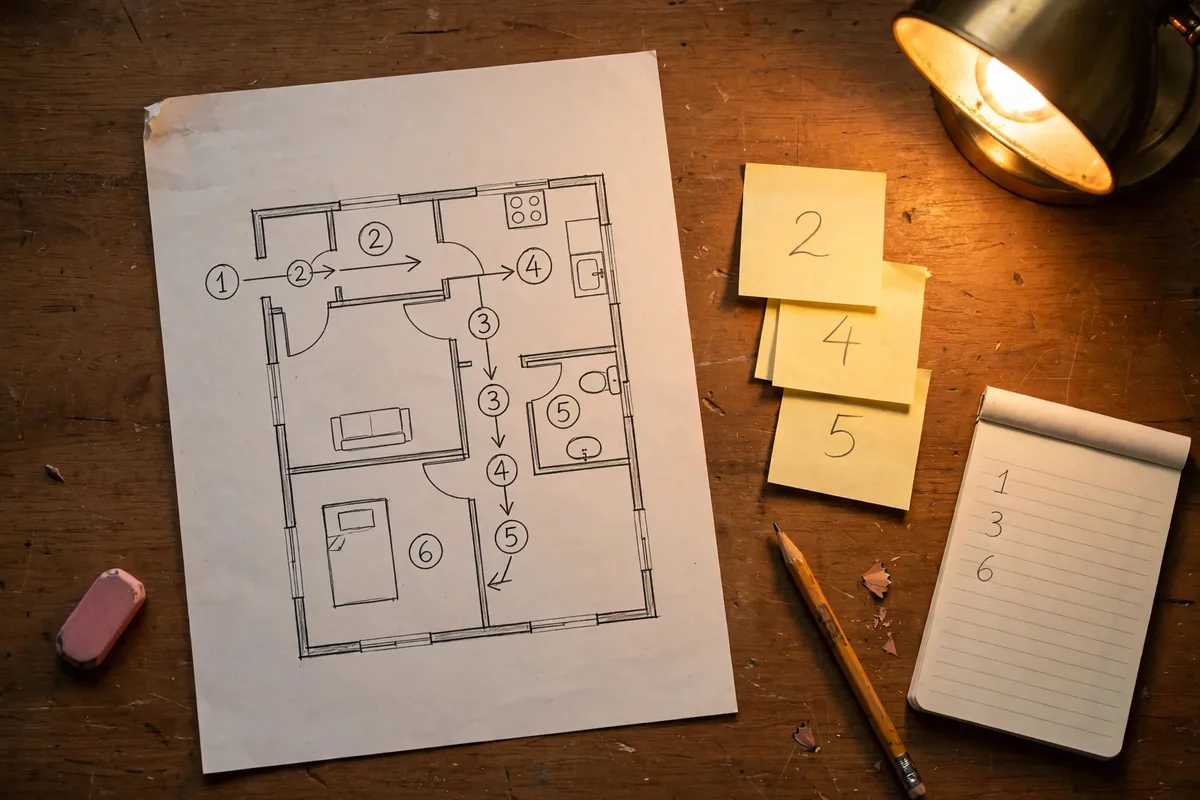
Step two, the route. Mentally walk it. Same direction, every single time. Fix the stops in their order as you go. Front door. Hallway. Coat rack. Sofa. Coffee table. Kitchen door. Stove. Fridge. Dining table. Sink. The stops keep their order no matter what. They have to. Their order is your list's order. Route wobbles, list wobbles. Simple as that.
Step three, the pictures. Each item becomes an image, and not a polite one. This is the part every memory athlete agrees on and every beginner gets wrong. The pictures that stick are moving. Oversized. Funny, rude, faintly disgusting, any of those. A banana sitting on a table, gone by Thursday. A banana the size of a canoe bursting out of the table wearing sunglasses, that one stays. Also: the picture has to touch its stop. Burn it, flood it, sit on it, start an argument with it. Parked politely next to the stop is not enough. Interacting. That is the word.
Step four. Walk it twice, slowly, eyes closed if that helps. First walk, place everything. Second walk, check everything is actually there and fix the stops where the picture has gone thin. Then close the palace and test yourself from the outside: item one, item two, all the way down, writing down what you find at each stop. And do not skip the testing part, it is not decoration. Testing is active recall. You drag the answers out of your own head with nothing in front of you. That dragging is what turns "I saw it earlier" into "ask me, I know it."
A worked example: ten elements, one house
Enough theory. Here is a real one. The first ten elements of the periodic table, in order, through the route from the step two example. Steal the pictures or make your own, yours will stick better, but see how the machine runs.
One, hydrogen. Front door. A fat hydrogen balloon, airship shaped, is bumping against the door trying to get in. Too big for the frame. Squeaking on the wood. Two, helium, coat rack. Party balloons, tied to the rack, bobbing about, and they make your voice go squeaky whenever you pass. Like you have been on the helium yourself. Absurd helps. Three, lithium, sofa. The TV remote is full of lithium batteries and they keep sparking, and the television changes channels by itself. Four, beryllium, coffee table. A heavy metal bee, beryllium, bee for short, standing on the table stamping one foot. Furious about something. The puns get worse from here. They are supposed to.
Five, boron, kitchen door. A wild boar, stuck. Halfway through the door, wriggling, not moving for anyone. Six, carbon, stove. A heap of black charcoal briquettes on the burner, smoking away. Charcoal is carbon, near enough for our purposes, and the smell gets into everything, curtains included. Seven, nitrogen, fridge. You open it and freezing vapour pours out over your feet, liquid nitrogen cold, everything inside white with frost. Eight, oxygen, dining table. An oxygen mask hanging over the table, aeroplane style, the drop-down kind, and everyone at the table breathing slow and deep. Nine, fluorine, sink. The tap will not stop foaming toothpaste. Fluoride, toothpaste, you see it. The sink is filling up with mint foam and nobody can stop it. Ten, neon, back door. A buzzing neon sign above it. Pink. Flashing OPEN, open, open.
Now walk it. Door, balloon. Rack, squeaky balloons. Sofa, sparking remote. Table, metal bee. Kitchen door, boar. Stove, charcoal. Fridge, freezing fog. Table, mask. Sink, toothpaste foam. Back door, neon sign. Hydrogen, helium, lithium, beryllium, boron, carbon, nitrogen, oxygen, fluorine, neon. Ten. Out of ten. Built in minutes. And here is the odd thing, it will still be there tomorrow when you walk it again. The house does the holding for you.
Running a palace inside a 25 minute study session
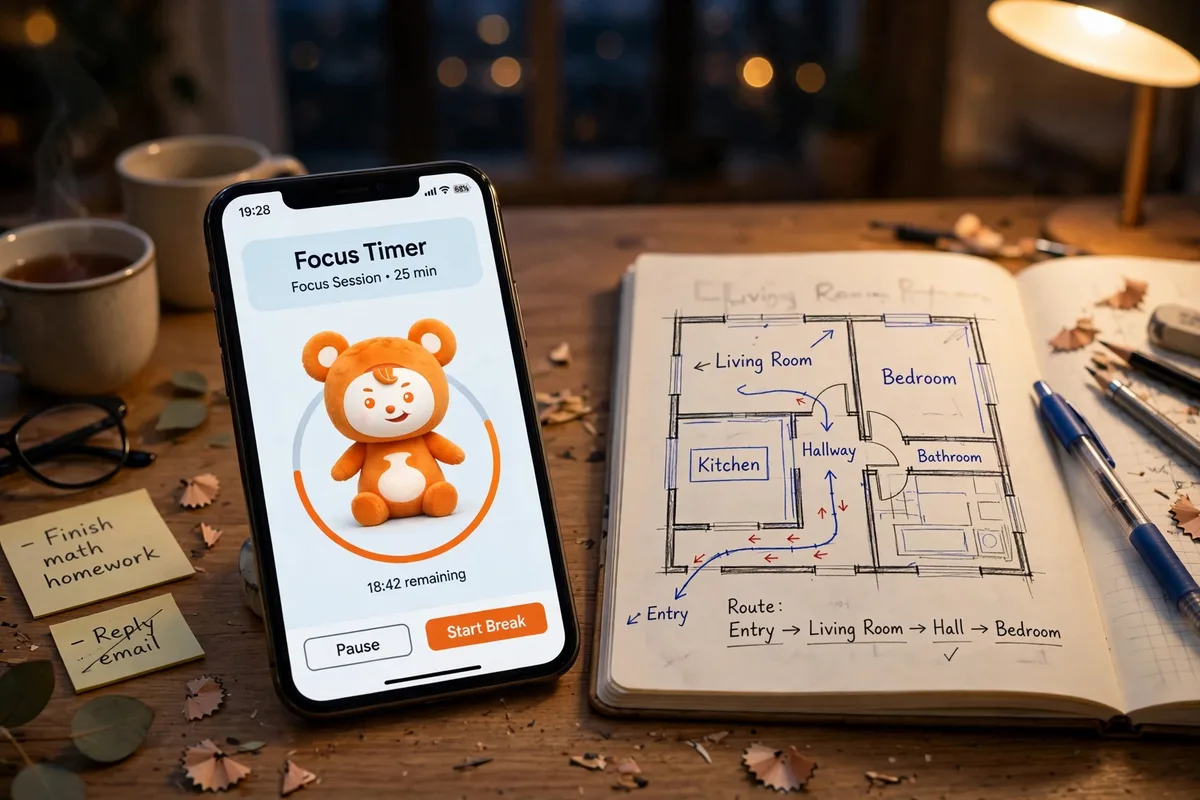
Palaces and timers get along, because building one has a beginning and an end, which is more than most revision can say. Our suggested session goes like this. Five minutes choosing the list and the route, and writing the list down in order, on paper. Ten minutes placing the pictures, stop by stop, no rushing, fixing thin ones as you go. Five minutes walking the route twice, list hidden, naming everything out loud if the room allows. Last five, testing from a blank page and writing down which stops failed. Failed stops get a bigger, ruder picture next session. That is the whole repair method. There is no other one.
Then reviews. A palace is not finished when it is built, nothing in memory is. Same day, one walk. Next day, one walk. Then let a few days pass and walk it again. Spreading the walks out like that is spaced repetition. It matters more than the size of the palace. Honestly it matters more than almost anything else in this post. A small palace on a review schedule beats a cathedral visited once. We run these as plain 25 minute sessions in Fluffy Friend, and the session history does the nagging about which palaces are due a walk.
Housekeeping, two rules. One palace per topic while you are learning. Two live topics in one kitchen will cross-contaminate, in the funniest and least useful ways. A list that is properly dead, exam passed, never coming back, the palace can be cleared. Walk it and take the pictures down one stop at a time. Most people never bother doing even that. Stop the reviews and old palaces fade on their own.
Where palaces are brilliant, and where they are not
Brilliant at: ordered stuff. Lists. Anatomy terms. Dates in sequence. Steps of a process. Vocabulary in sets. Formulas that have to come out exactly right. Speeches. If walking a route answers the question, then route it is.
Not brilliant at: understanding. A palace stores. Explaining is not in its skill set at all. All ten elements, in order, it hands you those happily. Why they sit in that order? It has no opinion. None. The why belongs to a different method entirely, the teaching one. You explain the topic in plain words until the gaps show up. That is the Feynman Technique. The two pair nicely, actually. Palace carries the cargo. Feynman does the comprehension. Testing checks both. Anyone selling a single method that covers the whole job is selling something.
Memory palace: questions people actually ask
What is a memory palace, in simple words?
Start with a building you know by heart. Your childhood home, most likely. It works as a filing system, that building. Everything you want to remember turns into a picture, a vivid one, and the pictures get set down at fixed spots along one route through the place. Remembering is the return trip: you walk the route and collect what you left. Formal name, method of loci. Most memory champions you will ever read about are using some version of it.
How do I build a memory palace for studying?
Place you can picture in detail. Route through it, ten to fifteen stops, same order every time. Each study item becomes a strange moving picture, set at a stop, interacting with the stop. Walk the route twice. After that, test yourself. Blank page, no peeking, what is at each stop. Reviews come later. Same day. Next day. A few days after that. Any picture that has gone thin gets rebuilt, bigger and weirder. That is the entire method, there is no advanced level hiding behind it.
Can I reuse the same memory palace for different topics?
Yes, eventually. No, not carelessly, and not while learning. Two live lists in one building interfere, and you will produce last month's items in this month's exam, confidently, which is worse than producing nothing. One active topic, one place. When a list is dead and the images have faded, usually because the reviews stopped, the palace can be cleared and used again.
How much can one memory palace hold?
More than feels reasonable. Ten to fifteen stops makes a sensible first one. But capacity, real capacity, is just however many distinct spots you can picture, and a building you know well has hundreds of them. Memory athletes chain whole buildings and streets together. For studying, the limit is rarely the palace. It is the reviews. An unreviewed palace empties. Size does not save it. Nothing does.
Does a memory palace help with understanding, or only lists?
Only storage, honestly. A palace is superb at handing you ordered facts on demand, and it explains none of them. Pair it with explaining the topic in plain words for the understanding, and self-testing for both. Used that way, as one tool in a set of three, it earns its keep.
So here is the whole offer. So do this. The house you grew up in. Ten things from your hardest subject. One 25 minute session. What you build in it will still be standing next week. If a timer helps you actually start the session, it usually does, then download Fluffy Friend free on Google Play and run it as a focus block, pet in attendance. Every in-app purchase supports real animal shelters. Build the palace. Walk the palace. The list will be there when you knock.