Study Breaks: How Often, How Long, and What to Do
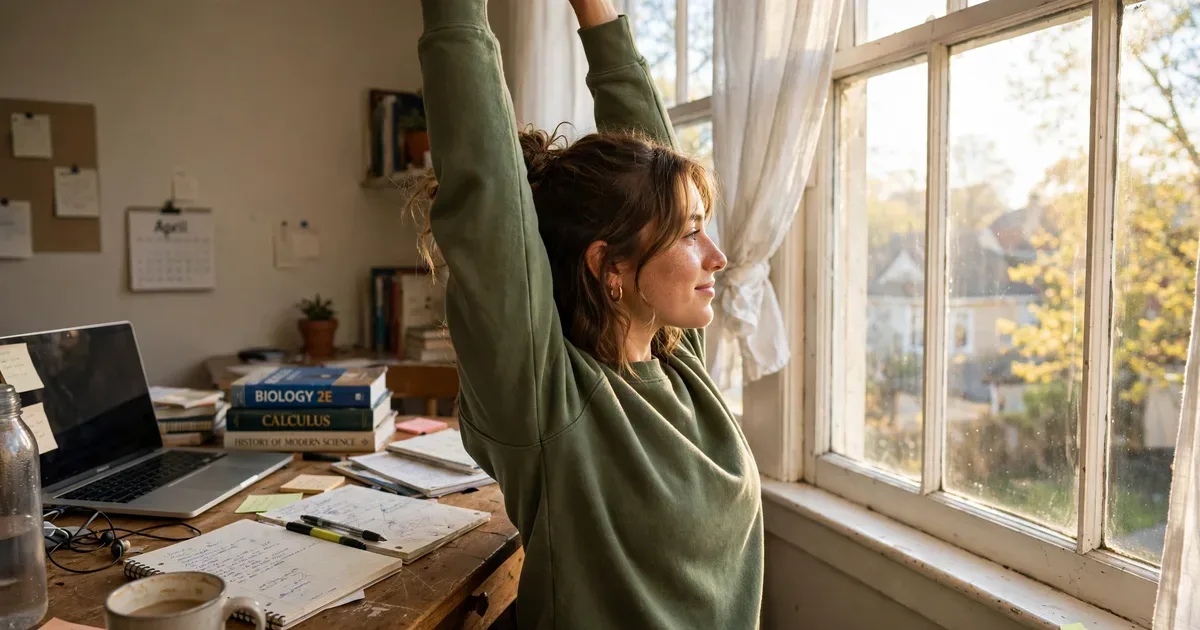
Here is a study session we have all sat through. Three hours, no breaks, heroic. You close the book feeling wrung out and vaguely noble, and the next morning you test yourself and find that hour one is in there, hour two is patchy, and hour three might as well have happened to somebody else. The session was three hours long. The learning was about one hour long, and it was the first one.
The instinct behind that session is that breaks are cheating. Minutes off the book are minutes stolen from the exam, or so the feeling goes. Feels true in your gut. The night before a test it feels truer than true. And it is wrong, not poetically wrong, measurably wrong, wrong in a way researchers can put numbers on. Attention does not work like a petrol tank, by the way. It does not just empty. It fades. Roughly on a schedule, too, and it fades whether you take your breaks or skip them, that part is not up to you. The only choice on the table is whether the fading happens during your working hours, while you sit there pretending to study.
We make a study timer app. Breaks are half our product, which makes us biased, obviously, but it also means we have had to read this research properly instead of waving at it. So here it is, the real version. Why focus decays. What the break studies found, including the parts that are less flattering to breaks than the headlines suggest. When to stop. How long to stop for. What to actually do in the stopped minutes. Because there is a popular break activity, you already know the one, that cancels the whole break almost to the minute.
Your focus fades on a schedule, whether you rest or not
None of this is new, either. Psychologists have watched performance slide downhill on long attention tasks for decades now. Slide is the right word. Slow at first. Then not slow. It has a name, the vigilance decrement, and it shows up in air traffic controllers, in people watching luggage scanners, and in students somewhere around page forty of a chapter they were following fine at page ten.
The interesting question is why. The old story was depletion: attention is a resource, you spend it, it runs out. In 2011, Atsunori Ariga and Alejandro Lleras at the University of Illinois proposed something stranger and, it turned out, more useful. The problem is not that the fuel runs out. The problem is that a goal held in mind for too long goes stale. They called it goal habituation. A goal held too long, your brain quietly stops responding to it. Same trick as the fridge hum in your kitchen, the one you only hear when it stops.
Their experiment was simple. The task was dull on purpose. Fifty minutes of it, watching for rare signals, the kind of thing designed to bore a person scientifically. Most groups declined steadily, as expected. But one group, given just two brief diversions during the task, a few seconds of thinking about something else, showed no decline at all. None. Their performance at minute fifty looked like their performance at minute five. Two interruptions. Seconds each. That was the whole intervention, and the goal stayed fresh to the end of the session anyway.
Worth sitting with, that one. It moves what a break even is. A break, on this account, is not time away from the studying. It is the reset. The thing that stops the studying rotting underneath you while you are still sat there, pen in hand, doing your best. The students in the no-diversion groups were not lazy. They worked the whole 50 minutes. They just worked the last stretch of it with a habituated goal and never knew.
What the micro-break research actually found
Zoom out from one experiment and the picture gets more honest, which we prefer.
In 2022, Patricia Albulescu and colleagues published a meta-analysis in PLOS ONE pooling the break research: 19 papers, 22 separate study samples, 2,335 people in total. The breaks studied were micro-breaks, ten minutes or shorter. The findings split into two halves, and the two halves are not equally strong.
The wellbeing half is solid. Short breaks raised vigor, properly, effect size 0.36 thereabouts. Fatigue dropped too, 0.35. Not enormous numbers. Real ones, though, the kind that kept turning up. People came back from a short break feeling like they could keep going. Less ground down by the day. That was the pattern. That result showed up again and again across the studies.
Performance is the modest half. Anybody selling breaks as a superpower has quietly skipped this half, and you can tell, because their version always sounds better. Overall, performance barely moved. 0.16, which is small, and not statistically significant either, and where it did reach significance it was on the lighter tasks, the clerical sort, not the heavy thinking. Nobody's hard problem got faster because they took ten minutes off. That is just not in the data. Break length mattered, though. The longer the break, within reason, the more performance came back. Short and token did less.
So the honest summary is this. Breaks keep the worker working. What breaks protect is the worker. Energy. Mood. The willingness to sit back down for block three, which on a long study day is most of the battle, honestly, the rest is timetabling. No spell. Hard problems stay hard. Ask anyone who has got to the end of a four hour study day still able to remember the morning. They know what the protection is worth.
How often should you take a study break, and how long should it be
The practical bit, then. Built off the research, not off vibes, ours included.
Twenty-five minutes of focus. Then five off. There it is, the famous one. It is the pomodoro rhythm, and it happens to line up with the Ariga and Lleras logic too. Stop while things are still working. Not after, not once you have read the same paragraph four times and started to hate the author. The timer mechanics, all of them, live in our Pomodoro Technique guide, if you want the setup spelled out.
Longer blocks suit some subjects, fifty minutes, reading-heavy ones mostly. Those earn ten to fifteen off, not five. Heavy work wants a real pause, is what the Albulescu numbers say. Five minutes after fifty of dense reading is a token. Tokens do not recover anybody.
After roughly four cycles, two hours or so of real work, take a proper long break. Twenty to thirty minutes. Eat something. Leave the room. This is the break that does the heavy recovery, and skipping it is how afternoons die.
Two adjustments. Harder material earns longer breaks, not shorter ones, whatever your guilt says. And if you are someone who needs the block length itself to flex with the day, the flowtime technique is the looser cousin of the pomodoro, same breaks, less rigid clock.
One more thing, because students ask: the break is scheduled, not earned by exhaustion. Waiting until you feel wrecked before stopping means every session ends in the habituated zone, practising at your worst. Stop while it still feels slightly unnecessary. That feeling is the sign you timed it right.
What to do in the break, and the one thing not to
One job, a break has. Get your attention clean off the task. All of it, so the goal switches off for a bit and can come back fresh afterwards. Anything that keeps a thread of attention on work, or replaces work with a different demanding stream, is not doing that job. Judged by that standard, the good break activities are almost boringly physical.
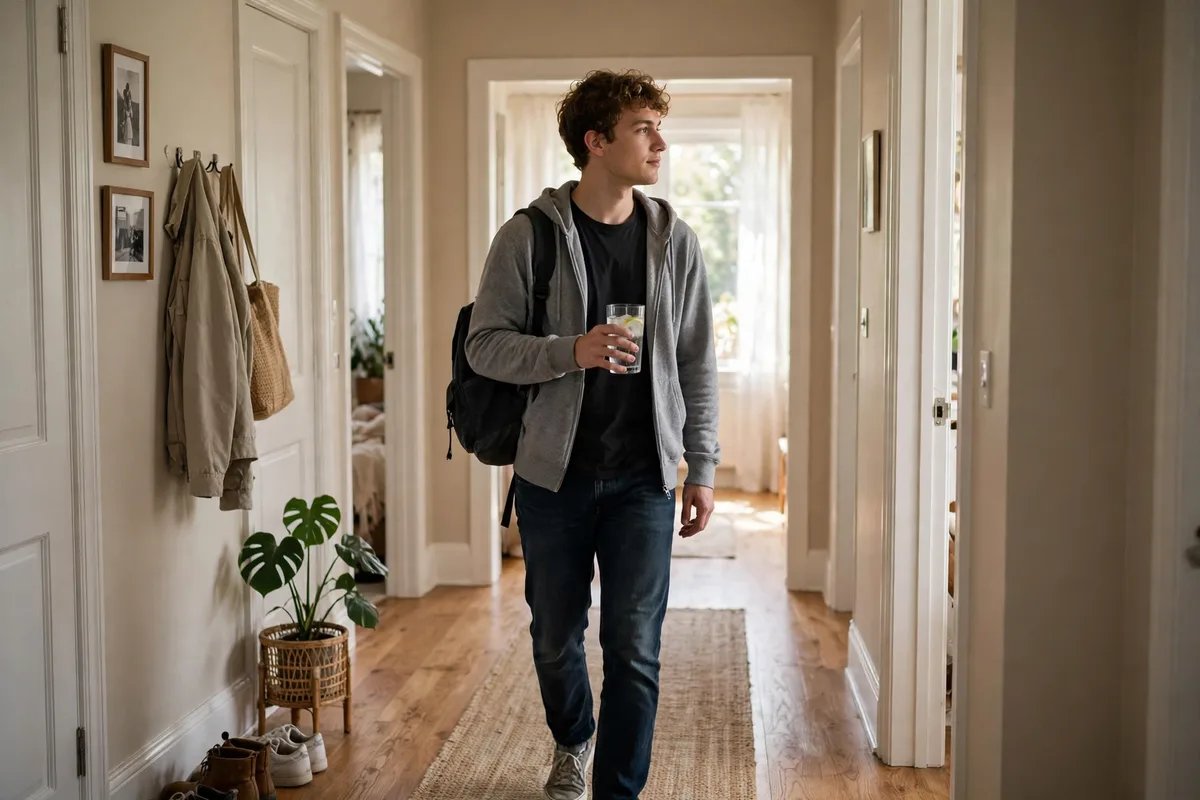
Stand up. Walk somewhere. Kitchen and back counts, corridor counts, it is the moving that counts. Water. Half the students studying tonight are mildly dehydrated and have decided that is a personality trait. It is not helping. Look out of a window at the furthest thing you can see, which rests the eyes in a way that looking at a nearer screen never does. Stairs if you have them. Daylight, if the day still has any. Two minutes at the door is enough. Your brain takes daylight seriously in a way it takes no lamp seriously. Stretch. Neck, shoulders, the whole book-shaped arrangement you have been folded into for an hour.
And then the exception, the one this whole section exists for. Do not spend the break on your phone.
This is not a moral position, it is a measured one. In 2019, Sanghoon Kang and Terri Kurtzberg at Rutgers ran an experiment with 414 undergraduates doing demanding word puzzles. Halfway through, some took a break doing a small task on their phone, others did the same task on a computer or on paper, and a fourth group took no break at all. The phone group came back the most mentally depleted of anyone. They took 19 percent longer to finish the rest of the work and solved 22 percent fewer problems than the other break groups. Their post-break performance was, roughly, the performance of the people who had taken no break at all.
Read that again. The phone break was worth about as much as no break. The computer and paper breaks, doing the identical task, genuinely restored people. The difference was the device. The phone drags a world in with it, is Kurtzberg's account. Messages waiting. Feeds refilled. The standing invitation, always there, to just check. Attention never leaves, not really. So the goal never resets. And you walk back to the desk five minutes older and exactly as tired, having spent the break and got nothing for it.
A break spent scrolling is a break you took and did not receive. Put the phone in another room for the five minutes. It will survive. So will you.
Breaks inside a real study day
Assemble the day out of these parts and it changes shape. Less marathon. More rhythm, work and rest alternating like they were designed to, which, here, they were. Focus block. Small break, physical, phone elsewhere. Focus block. Small break. Focus block. Long break with actual food in it. The day has a pulse. Your session history at the end of it shows work you can point to, instead of one grey smear of desk time you half remember.
Our app is built on exactly this, for the record. The timer does not just count the studying. It counts the breaks as part of the session, with the pet resting when you rest, because a day of study is the blocks and the gaps together. Students who only track work time learn to fear the gaps. Students who see the whole rhythm learn to use them.
And protect the biggest break of all while you are at it. Sleep is the long version of everything in this post, the full reset, and the evidence that it files the day's learning away is in our post on sleep and memory. The student who guards breaks during the day and then trades the night away has understood the small print and missed the headline.
Study break questions students actually ask
How often should you take study breaks?
Every 25 to 50 minutes of actual focus, for most students. Actual is doing work in that sentence. Twenty-five and a short break is the pomodoro default, and it suits the dense stuff, the new material, the chapters where every paragraph fights back. Fifty is for review work, familiar ground, things that need a longer runway to get into. It earns the longer break after, and it should get it. Stop before the fade, that is the logic, not after it. Ariga and Lleras put the diversions inside the session and the decline never happened. The groups left to push through declined steadily, on schedule, like the experiment was rude enough to prove the point. Same page three times is data. Your interval is too long. The clock can say what it likes.
How long should a study break be?
About 5 minutes after a 25 minute block. Ten to fifteen after a block of around 50 minutes. And twenty to thirty after about four cycles, the proper one, with food in it. Albulescu's 2022 pooling of 22 samples found energy restored and fatigue down after short breaks, reliably, and the bigger performance recovery sitting with the longer breaks. So after hard work, err long. After light work, five honest minutes will do. The exact number matters less than this: the break has to end. A break with no end to it is just stopping, with better PR. Let the timer call you back. Your mood will negotiate, your mood is a terrible manager.
What should you do during a study break?
Move, mostly. Stand up, first of all. Then walk a bit, water, eyes on the furthest thing out the window, a minute of daylight if the hour allows it, stretch whatever has gone stiff. What makes it work is the attention leaving, fully, and the physical low-demand things are simply the best at taking it. Nothing cleverer is required. Long breaks: eat. Something real, not three biscuits and a grudge. Not a break: messages. Not a break: feeds. Not a break: a different screen with a different stream on it. That is a task switch in a break's coat, and it restores, the next answer has the numbers, close to nothing.
Can I check my phone during a study break?
You can, and the break will mostly not count. In the 2019 Rutgers experiment, students who spent their break on their phone came back as mentally depleted as students who had no break, took 19 percent longer over the remaining work, and solved 22 percent fewer problems than the other break groups. The same task done on paper or a computer restored people properly. Phone minutes feel like rest. They measure like work, which is the entire problem in one line. Another room. Until the session is done. Then check it till you are sick of it, with our blessing.
Should I take a break if I feel fine and focused?
Yes. One concession, a small one, then yes. Mid-sentence, mid-problem, you get to finish the thought. People are not machines. Then the break still happens. Feeling fine at minute twenty-five tells you nothing about minute seventy. The decrement does not knock. It just lowers the quality of the work, quietly, while your confidence, uninformed as ever, stays exactly where it was. The two brief diversions in the Ariga and Lleras study were given to people who had not asked for them, on a schedule, and that group is the one whose performance never dropped. Scheduled, not deserved. Works for breaks. Works for most things, if we are honest.
The pattern keeps itself if you let a timer hold it: download Fluffy Friend free on Google Play, and the blocks, the honest breaks, the long rest after four sessions all just happen, with a history at the end showing the day you actually had. Every in-app purchase supports real animal shelters. Work in blocks. Rest on purpose. The breaks are part of the studying.