Active Recall: The Study Method That Beats Re-Reading
Here is a scene we hear about a lot. You read your notes the night before. Then you read them again. And then again, just in case. Every line looks familiar. Nod, nod, yes, I know this. Then comes the exam. Or a meeting. Or somebody just asks you a plain question about it in conversation, and your head is empty. Blank. Feels like the notes lied to you, honestly. They did not. It is just what re-reading does.
Active recall is the opposite habit. Instead of looking at the material again, you close it, and you make your brain produce the answer from memory. That is the whole method, more or less. It feels worse than re-reading. It works better. This post covers why that trade keeps showing up in the research, and one full 25 minute recall session written out minute by minute, because most guides skip that part and it is exactly the part people get stuck on.
What active recall actually is
Active recall, as we mean it here, means information comes out of your own memory, dragged out by you, not plonked in front of your eyes once more. Researchers mostly call it retrieval practice. Students call it self-testing, or just testing yourself. Same animal.
The rule is small. The answer needs to come out of your head. Not off the page. Writing it down counts. Saying it out loud, that counts too. Flashcards count as well, but only when you actually answer before flipping the card over. If you can see the material while you are answering, that is not recall. That is just reading, with a bit of ceremony wrapped around it.
None of it is new. None of it is an app, either. It is the reason practice tests have always worked, back when they were just a teacher with a stack of paper. The effect has a name of its own, the testing effect. What is new-ish is the pile of studies on it, and the studies are weirdly consistent, which almost never happens in psychology.
One more thing, because people get this wrong. The struggle is not a side effect. The struggle is the engine of the thing. When an answer will not come easily, reaching for it anyway flags it to your memory: this one matters, hold onto it. Researchers gave it a name, desirable difficulty. Students call it annoying. Both are near enough right, if we are honest.
Why re-reading feels like learning but is not
Re-reading does have one powerful thing on its side. It feels good, and that, right there, is the catch. Second time through, it all looks familiar already, the sentences run smooth, nothing trips you. Your brain reads that smoothness as knowing. It is not knowing. It is the illusion of competence, and it is a very comfortable place to live. What is actually going on there is recognition, nothing more.
Recognising is one skill. Recalling is another one entirely, and an exam tests the second. Nobody in an exam hands you the paragraph and asks, does this look familiar to you. They hand you a question and a blank space. If all your practice was recognising, the blank space is where that goes to die.
There is a nastier bit. Re-reading makes you confident, specifically confident, while delivering very little. In the studies coming up, the heaviest re-readers predicted they would remember the most. They were wrong in a clean, measurable way. We have all been that student. I have been that student with highlighter on my hands.
Highlighting? Same trap, brighter colour. Your hand moves. The page goes yellow. And you walk away with the feeling that work happened. The memory, mostly, does not.
What the studies keep finding
Start with the big review. Dunlosky and colleagues, in 2013, rated ten common study techniques. Only two got their top rating, high utility. Practice testing was one. The other was distributed practice, study spread out over time. Re-reading and highlighting both got rated low utility. The two most popular techniques in any library are basically the two worst ones on the list. The full ranking, if you want it, is in our piece on the best study techniques backed by science. Two more methods from the same family get their own posts here: the memory palace, for lists that have to come out in order, and interleaving, for practice sets that mix problem types the way exams do.
Then there is the experiment everyone cites, Roediger and Karpicke, 2006: students read a passage, then either re-read it over and over or read it once and spent the remaining time writing down all they could remember. Five minutes later, the re-readers won. Of course they did, they had just read it four times. One week later it flipped completely. The testing group remembered about 61 percent of the passage. The re-reading group managed about 40. The re-readers had also forgotten over half of what they had at the start. The testers had forgotten about a tenth. Re-reading wins the evening. It loses the week.
And it is not just beating doing nothing much. Karpicke and Blunt, published in Science in 2011, put retrieval practice up against concept mapping, a genuinely respected study method. Students who practised recalling learned more than the concept mappers, on straightforward questions and on harder inference ones. Here is the part we love. The advantage held even when the final test was itself making a concept map. Retrieval practice beat concept mapping at concept mapping.
Later reviews agree. A 2021 meta-analysis, 242 studies of it, landed in the same place Dunlosky did.
So no, we are not being dramatic for a headline when we call active recall the study method that beats re-reading. We are just reading the table out loud.
How to practice active recall: four ways that fit a real day
Four ways follow, all just active recall examples with different furniture, so pick the ones you will actually do.
One. Flashcards, done properly. Read the question side. Answer it, out loud if you can, in a full sentence, committed. Then flip. If you flip first and nod, that was re-reading wearing a costume. The card is only a delivery system. The recall has to happen before the flip, otherwise it does not happen at all. The cards themselves are a craft of their own, one fact per card, one clear answer, graded honestly at the flip, and our flashcards guide takes one bad card apart and rebuilds it as six.
Two. Practice questions. End of chapter questions work. Old exam papers work. A friend quizzing you works. What matters is that you write or say a real answer. Thinking "yeah, I would write something about the mitochondria" is not an answer. It is a rumour of an answer. Commit to words, then check them.
Three. Blurting. Blurting, some call it, or a brain dump, same thing by another name. Blank page, everything else set aside, and down goes everything you remember about a topic. Then open your notes and see what is missing. It is the crudest form of active recall and maybe the most honest one, which is why the next section is built on it.
Four. Teach it out loud. Explain the thing to an imaginary twelve year old, or a real one, or the wall. This is the Feynman technique, more or less. It earns a walkthrough of its own, so we gave the Feynman Technique a full post, steps, worked example and all. Where your explanation stalls, that is where your knowledge stops. Strangely uncomfortable way to find out. Takes about ninety seconds.
And if you want active recall without flashcards, fine. Two of them need no cards, no app, no setup at all, just a blank page and a pen, and that pair will carry the whole method. And if you want your notes themselves doing some of the quizzing, that is the trick behind Cornell notes, a page layout with the test built in.
A 25 minute blurting session, minute by minute
Here is the part the other guides leave out. They tell you to blurt for five minutes and then, apparently, your afternoon is your own problem. So here is the whole session, the way we run it, inside one 25 minute focus block. We have written before about how students use a study timer app to run a whole study day in timed blocks. This is what one of those blocks can hold.
Minutes 0 to 5. Pick one chunk. One lecture, one section of a chapter. Not the whole chapter. Chapters are where good intentions go and die. Read the chunk once, properly, pen mostly down. You are not memorising yet. You are loading. If you read it three times here you have just smuggled re-reading back in through the side door.
Minutes 5 to 7. Close everything. Book shut, notes face down, phone in another room if you can stand it. Sit there. Let it go a bit fuzzy. This bit feels like wasting time. It is the opposite. If you blurt the second you close the book, you are copying out of short term memory, which is cheating at solitaire. That little bit of forgetting is what makes the recall real.
Minutes 7 to 15 belong to the blurt: blank page out, write everything you remember about the chunk, messy as it comes, order all over the place, order does not matter. Half sentences, arrows, a badly drawn diagram, all welcome. When you stall, which you will, no peeking is allowed. Write the question you wish you could answer, in brackets, and move on from it. The stalls are data. They are the most useful thing on the page.
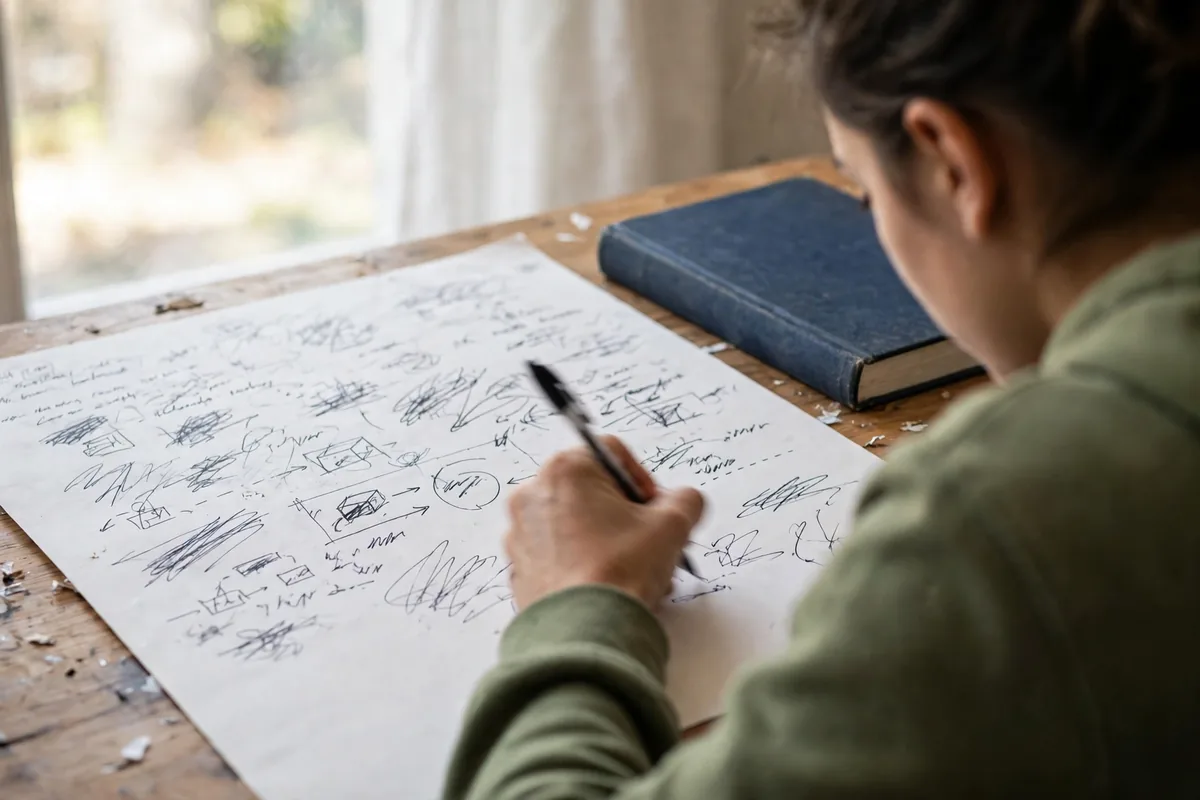
Minutes 15 to 21. Open the source again. Different colour pen if you have one. Go through your blurt and mark what you missed, and mark what you got wrong, separately. Wrong and confident is the dangerous category. That is the material that would have sunk you in the exam without ever warning you. Star those bits.
Minutes 21 to 25. Now the bit nobody tells you. Every gap becomes a question, at the top of a fresh page or as a new flashcard. Not "revise chapter 4." Questions. "What are the three causes of X." "Why does Y happen before Z." Those questions are where your next session starts. So the session ends with tomorrow's work already written, gaps still fresh. Tomorrow, no deciding what to study: just answering the questions you wrote.
Break, properly, when the timer rings. Then another block if you have one in you. And if the exam is close and you need the days planned too, our guide on how to study for exams lays out how these blocks stack into a plan that holds up.
How often to recall, and the mistake of dropping what you got right
Short answer first. Little and often wins, big and rare loses. And the recalls themselves want spreading out. The forgetting curve, steep at the start, flattens later, provided you keep catching it. Same day you learn it, once. Next day, again. Once more, a few days later. That spreading is spaced repetition, called that, and it pairs with recall just this way. Recall is the exercise. Spacing is the timetable. One without the other is half a method.
Now the mistake, because nearly everybody makes it. You recall a fact correctly, once, and you drop it. Out of the deck, off the list, done forever. Karpicke and Roediger tested exactly this in 2008, on students learning word pairs. In some groups, once a word was recalled correctly it stopped being tested. A week later, the words that kept getting tested were recalled about 80 percent of the time. The dropped ones, about 36 percent. And here is the kicker. Extra re-studying of the dropped words changed nothing. The testing did the keeping. Getting it right once counts as a starting line, not a finish, whatever it feels like.
So leave your correct answers in the rotation a while longer. A rough rule we use: if you can still produce it cold, stretch the gap before the next recall. If it has gone a bit fuzzy, you shorten the gap. No system knows your gaps better than a failed blurt does.
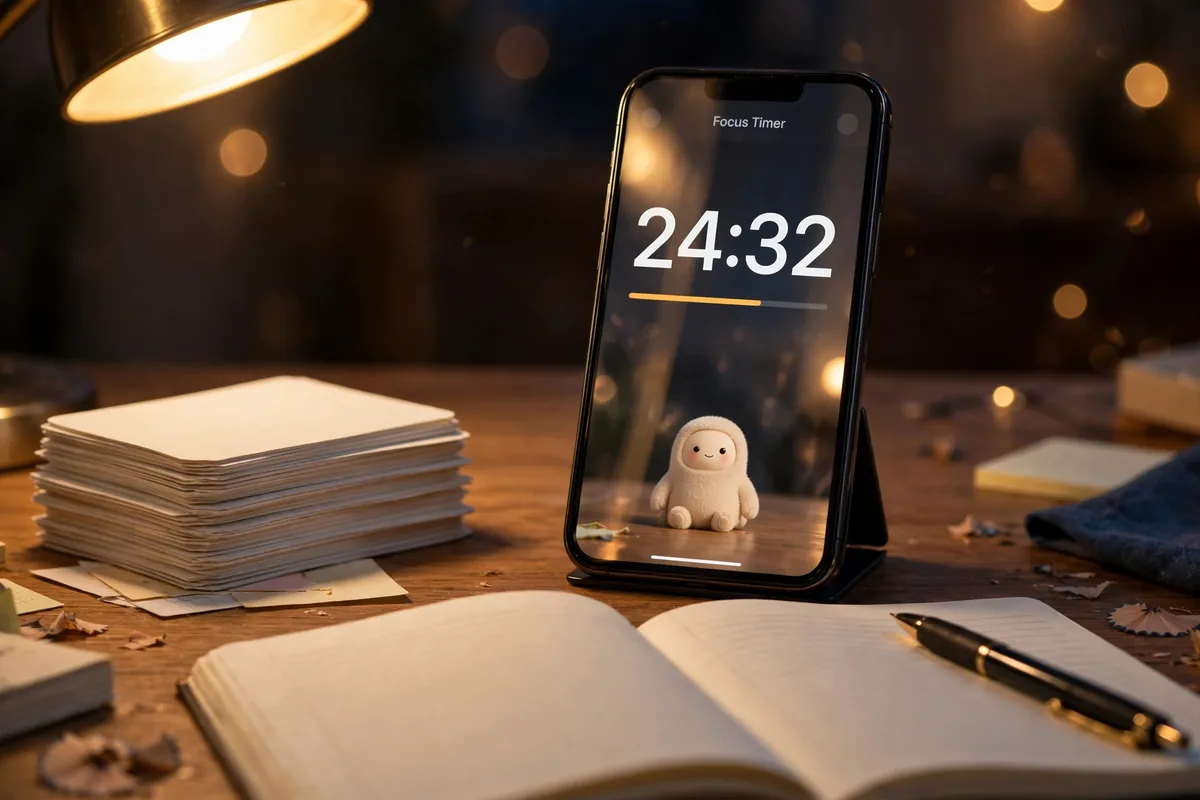
This is also where a bit of bookkeeping helps. In Fluffy Friend we keep a session history, and the most useful thing about it is the honesty. It shows which topics you actually recalled, in real sessions, versus the ones you only meant to. There is a reason the 25 minute sessions are the default in there. Long enough for a full read, blurt and check cycle, short enough you will actually start one at 9 pm. Which is when most studying happens, let us be real.
Active recall: questions people actually ask
What is active recall, in studying?
Studying by dragging the answers out of your memory instead of looking at them yet again, that is what active recall is. You shut the book. You ask yourself the question. Then you drag the answer out of your own head. Then you check. Flashcards are one form. So are practice questions, blurting onto a blank page, and teaching a topic out loud to nobody. The checking matters. Recall without checking can practise your mistakes in nice and deep.
Why does active recall beat just re-reading, then?
Because pulling an answer out is what makes a memory stronger, long-term retention is built out of it, and re-reading mostly just makes the page look familiar. Familiarity feels like knowing and tests like nothing. In Roediger and Karpicke's 2006 experiment, students who tested themselves remembered about 61 percent a week later, against about 40 percent for the re-readers. Same material. Same total time spent. Different activity.
How do I actually practice active recall?
Pick one small chunk of material. Read it through, once. Close it. Then whatever you remember goes down, on paper or out loud. Your version gets checked against the source, gaps marked. Turn those very gaps into questions for next time. That loop is the whole practice. The 25 minute session further up is that loop with a timer wrapped around it.
Is active recall the same as using flashcards?
No. Flashcards are one tool for doing it, the famous one. The method is the retrieval, not the card. Blurting, past paper questions and explaining a topic out loud are all active recall with no cards involved. And the reverse is true too. Flashcards where you flip the card before answering are not active recall at all. That is just re-reading, in a small rectangular shape.
How often should I use active recall when studying, then?
Most sessions, that would be the ideal. First a topic gets recalled the same day you learn it, again the next day, and once more a few days after that, gaps stretching wider the easier it gets. Keep things you got right in the testing a few more times before dropping them, because one correct recall is weaker evidence than it feels. If a session of yours contained no recall whatsoever, it was probably a reading session in a study costume.
Active recall needs some kind of container, honestly. Without one it stays a good intention you keep meaning to start on Monday. Ours is a timer and a small pet with strong opinions about finished sessions. So download Fluffy Friend free on Google Play, why not, and start one 25 minute session with the blurt running inside it. The study timer mode keeps the block honest. Your pet celebrates the finished ones and grows as you stack the sessions up. Let the streak do the quiet nagging, then, so you do not have to. Every in-app purchase supports real animal shelters. Close the book. Ask yourself the question. That was always the whole secret.